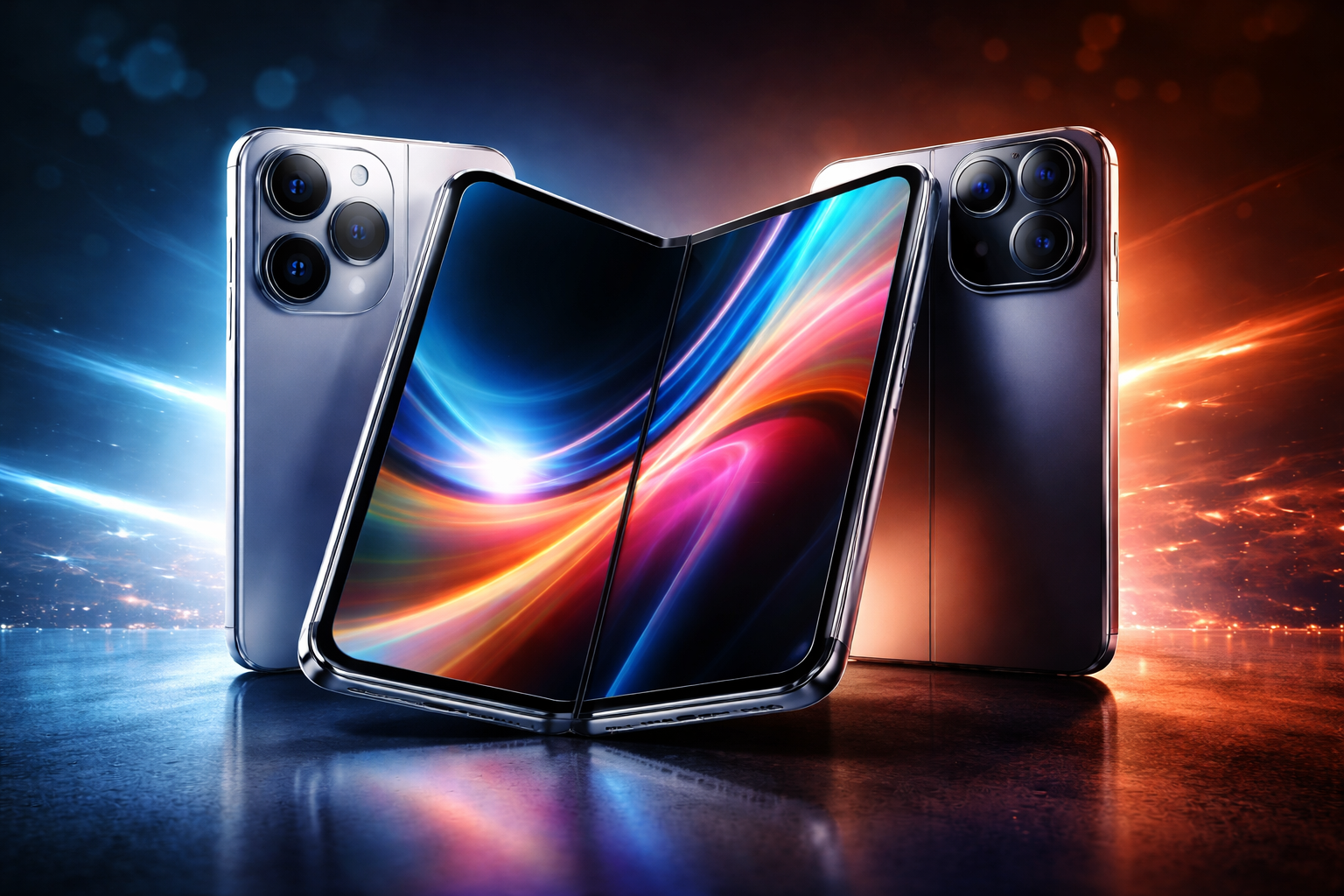
Best iPhone Ultra Fold 2026: Storage Guide, 3 Picks
If you’re searching for the best iPhone Ultra Fold 2026, you’re probably stuck on the one decision Apple always makes expensive: storage. And on a first-gen foldable that may start around $2,000 (rumored), choosing the wrong tier can feel like paying a “panic tax” later.
So, which iPhone Ultra Fold storage should you buy—256GB, 512GB, or 1TB? Below is a practical, buyer-first guide built around real usage: photos, 4K video, offline downloads, apps, and how long you plan to keep the phone. Also, because this is rumor season, we’ll keep expectations grounded and focus on value.
Quick summary: which storage is best?
For most people, 512GB is the best balance of price and breathing room on a premium foldable. 256GB works if you’re iCloud-first and stream everything. 1TB only makes sense if you regularly shoot lots of high-quality video, keep big offline libraries, or plan to keep the phone 4–5 years with minimal storage management.
The 3 best iPhone Ultra Fold 2026 storage picks
- Best overall value: iPhone Ultra Fold 512GB (room to grow, less storage stress)
- Best “lowest buy-in” option: iPhone Ultra Fold 256GB (cloud-first users)
- Best for creators and heavy offline use: iPhone Ultra Fold 1TB (video, big files, long ownership)
Now, let’s make that decision feel less like a guess.
Why storage matters more on a foldable
A foldable changes how you use your phone. With a bigger inner screen, you’re more likely to watch more video, download more for travel, multitask with heavier apps, and play larger games. In other words, your iPhone stops behaving like “just a phone” and starts acting like a mini tablet.
As a result, storage pressure shows up faster. Caches grow. Offline downloads stack up. Your photo library balloons. And if you buy a first-gen foldable, you may want a smoother, less fussy experience—because you’ll already be learning a new form factor.
Expected storage tiers (rumored) and why pricing stings
Nothing is official yet. Still, most rumor coverage expects three tiers: 256GB, 512GB, and 1TB, similar to recent premium iPhone patterns.
What’s different is the likely starting price. If the iPhone Ultra Fold launches above $2,000, the storage upgrades could feel smaller as a percentage of the total price, yet still hit your wallet hard in absolute dollars. Meanwhile, Apple’s current flagship pricing gives a baseline: the iPhone 16 Pro Max starts at $1,199 in the U.S., per Apple’s iPhone 16 Pro page. A foldable would sit well above that.
So, you’re not just picking storage. You’re deciding how much “future-proofing” is worth paying for on a first-generation device.
Best iPhone Ultra Fold 2026 storage: how to choose fast
If you want a quick decision framework, focus on three questions:
- How do you handle photos and video? Mostly iCloud, or mostly local?
- Do you download media for offline use? Flights, commutes, travel, spotty coverage?
- How long will you keep the phone? 2 years, or 4–5 years?
Next, match your answers to the storage tier profiles below.
Who should buy iPhone Ultra Fold 256GB (and who shouldn’t)
The iPhone Ultra Fold 256GB model will likely be the entry point, and for some buyers it’s the smartest way to test the foldable life without paying every possible upgrade.
256GB is enough if you…
- Use iCloud Photos and keep “Optimize iPhone Storage” on
- Stream most music and video instead of downloading
- Don’t shoot long 4K clips often
- Like a “clean phone” with fewer games and fewer large apps
Also, 256GB can work if you treat your phone like a portal, not a hard drive. In that case, iCloud does the heavy lifting, and your local storage becomes a short-term buffer.
256GB will feel tight if you…
- Record lots of 4K video (especially long clips)
- Download movies and series for travel
- Keep years of photos locally “just in case”
- Install large games, pro apps, or lots of creative tools
Apple’s own guidance makes the basics clear: apps, media, and system data all eat storage, and you sometimes need to actively manage it when space runs low. You can see Apple’s tips here: Manage storage on iPhone (Apple Support).
In practice, 256GB buyers often end up doing more maintenance: deleting downloads, offloading apps, and playing storage whack-a-mole. If you hate that, move up.
Why iPhone Ultra Fold 512GB is the best value for most buyers
If you want the “safe middle,” 512GB is usually the sweet spot on premium phones. And on a foldable, that logic gets stronger.
First, 512GB gives you room for the stuff people actually do on big screens: offline video, heavier apps, and larger games. Second, it reduces the daily friction that ruins ownership. Nobody wants a $2,000 phone that constantly asks you to delete something.
512GB makes sense if you…
- Take lots of photos and short videos, especially of family and trips
- Download playlists, podcasts, and some video for offline use
- Keep the phone 2–4 years
- Want to avoid storage anxiety without paying for the top tier
Just as important, 512GB gives you flexibility if your habits change. Maybe you start shooting more video because the bigger inner screen makes editing more fun. Or maybe you travel more and download more. With 512GB, you can change your behavior without immediately changing your phone.
When iPhone Ultra Fold 1TB is actually worth it
The 1TB version sounds like the dream tier. However, most people don’t need it, and “nice to have” can get very expensive very fast.
Still, 1TB becomes logical for a specific type of buyer: someone who creates a lot of content, works with big files, or refuses to rely on cloud storage.
1TB is worth it if you…
- Shoot lots of high-quality video and keep it on-device
- Edit video on your phone and store projects locally
- Carry a big offline library (movies, shows, music) all the time
- Plan to keep the phone 4–5 years and want maximum headroom
On the other hand, if you mainly browse, message, take casual photos, and stream media, 1TB can turn into a pricey “just in case” purchase you never use.
A simple storage “calculator” (real-world examples)
Exact file sizes vary by settings and apps. Still, these scenarios mirror how people actually fill storage.
Scenario A: iCloud-first casual user (256GB works)
- Photos in iCloud, optimized local storage
- Streaming for Netflix/YouTube/Apple Music
- Some offline podcasts and a few playlists
- 10–20 social apps, no huge games
In this case, 256GB is often fine. You’ll still want free space for system data and caches, but you can stay comfortable if you keep downloads under control.
Scenario B: camera-heavy family user (512GB is the stress-free pick)
- Thousands of photos and lots of short 4K clips
- Group chats full of shared media
- Offline shows for kids during travel
- A handful of larger apps and games
Here, 512GB prevents constant cleanup. It also gives you a safety buffer when your storage spikes after trips and holidays.
Scenario C: creator/power user (1TB makes sense)
- Frequent long-form video shooting
- Local storage of projects, assets, and exports
- Offline reference library and downloads
- Heavy apps and lots of multitasking
For this buyer, 1TB isn’t overkill. It’s a workflow choice.
Foldable-first-gen caution: should you buy extra storage “just in case”?
It’s tempting to buy more storage because it feels like insurance. But extra storage won’t protect you from the core first-gen risks: durability questions, unknown repair costs, and unknown long-term resale behavior.
So, treat storage as a usage decision, not a fear decision. If you don’t shoot lots of video and you stream most media, 1TB won’t magically make the phone a better purchase.
That said, first-gen foldables can create new habits. Because of that, many buyers land on 512GB as a “comfortable default.” It’s not the most expensive, yet it gives you room to grow into the form factor.
Storage vs resale value: will higher storage pay you back?
Higher storage usually helps resale, but it rarely pays back dollar-for-dollar. Buyers like bigger numbers, sure. However, the used market also cares about condition, battery health, and perceived reliability.
With a foldable, condition may matter even more. If the screen or hinge shows wear, storage won’t save your resale price. So, buy the storage you’ll truly use, not the storage you hope will rescue resale later.
How iCloud and streaming change the math
If you already live inside iCloud, Spotify, Netflix, and YouTube, you can often use less local storage than you think. That’s why 256GB can still be practical for many people—even on a premium phone.
However, cloud-first doesn’t mean cloud-only. Apps still grow. System data still grows. Cached media still piles up. Plus, travel and poor coverage can push you into downloading more than usual.
So, if you love cloud convenience but hate storage maintenance, 512GB remains the smoother choice.
Is the iPhone Ultra Fold worth buying at all?
This is the question under the question. If Apple prices this device at a major premium, you should ask what you get back: a bigger inner screen, different multitasking habits, and a new way to read, watch, and work.
At the same time, foldables stay a premium category with real trade-offs. Consumer-focused testing outlets often highlight durability and price as key concerns in foldables, not just specs. See, for example, Consumer Reports coverage of foldable phones.
If you want the newest form factor and you accept first-gen uncertainty, the Ultra Fold may be your kind of purchase. But if you want proven long-term value, a Pro Max-style iPhone could still be the safer bet.
How it compares: Ultra Fold vs Pro Max vs Galaxy Z Fold
You’re not choosing storage in a vacuum. You’re choosing between categories.
Ultra Fold vs a Pro Max iPhone (value argument)
A traditional Pro Max iPhone tends to deliver predictable durability, predictable repair paths, and strong long-term value. Also, Apple’s pricing history is easier to read in that segment, which makes your “value for money” calculation less stressful.
Meanwhile, a foldable offers the big-screen experience in your pocket. If that changes your daily use, you may feel the premium is worth it. If you only open the inner screen a few times a week, you might not.
Ultra Fold vs Samsung’s Galaxy Z Fold line (foldable benchmark)
Samsung’s Fold line gives you a mature foldable reference point: multiple generations of hardware learning, software tuned for foldables, and lots of user feedback. You can see the current positioning on Samsung’s Galaxy Z Fold official page.
If you’re open to Android, Samsung offers a “known quantity” foldable experience right now. On the other hand, if you want iOS and Apple’s ecosystem, the iPhone Ultra Fold (if it launches as rumored) would target people who won’t switch platforms.
Best storage to buy by user type (quick match guide)
- Casual, cloud-first buyer: Buy 256GB if you stream and use iCloud Photos.
- Most buyers (photos + travel + apps): Buy 512GB for the best iPhone Ultra Fold value for money.
- Parents with tons of photos/videos: Lean 512GB, especially if you keep phones longer than 2 years.
- Power user who downloads a lot: Choose 512GB, or 1TB if you hate managing storage.
- Creator / heavy video shooter: Choose 1TB, especially for long ownership.
- Unsure and anxious about first-gen risks: Either buy 512GB for comfort, or wait for gen 2.
If you’re trying to decide what iPhone Ultra Fold to buy for the least regret, this is the simplest rule: pick 512GB unless you’re sure 256GB fits, or sure 1TB is necessary.
What happens next: rumors, timing, and why waiting may help
Because Apple hasn’t confirmed the device, everything about price, storage tiers, and features remains provisional. That uncertainty matters, especially if early supply is limited or demand spikes.
Meanwhile, waiting can help in two ways. First, you’ll get confirmed specs and real pricing, not estimates. Second, you’ll get early reviews that answer the big question: how durable and repairable is this first-gen foldable?
On the other hand, if you know you want the form factor and you want in early, you can still make a smart purchase by choosing storage based on your habits—not on hype.
Expert perspectives: the cautious view vs the early adopter view
The cautious view (value and longevity first)
Cautious buyers focus on long-term reliability, repair cost risk, and resale uncertainty. They often prefer proven phone designs and predictable upgrade cycles. If that sounds like you, a non-foldable flagship may still offer better value per dollar.
The early adopter view (experience first)
Early adopters accept trade-offs to get a new experience. For them, the big inner screen is the point. They’ll pay more for convenience, novelty, and productivity benefits. If you’re in this camp, 512GB often feels like the right “do it once, do it right” storage tier.
Either way, smartphone ownership trends show people keep phones for years, not months. That’s one reason storage choices matter. For broader context on mobile device use, see Pew Research Center’s mobile fact sheet.
FAQs
Is 256GB enough for the iPhone Ultra Fold?
Yes, if you rely on iCloud, stream most media, and don’t store lots of 4K video locally. However, it gets tight faster if you download video, install big games, or keep large photo libraries on-device.
Is 512GB the best value for a foldable iPhone?
For most buyers, yes. It usually balances cost and long-term comfort best, especially on a premium, first-generation foldable.
Do foldable phones need more storage than regular phones?
Often, yes. The bigger screen can push heavier use—more downloads, larger apps, and more media. Still, you don’t automatically need 1TB.
Should I buy 1TB if I plan to keep the phone for years?
Only if your storage use is already heavy (lots of video, offline media, large files). If you mainly stream and use iCloud, 512GB is often enough even for longer ownership.
Will iCloud make 256GB enough?
It can. iCloud reduces local photo and file storage needs, but you still need space for apps, cached media, and system data. If you hate managing storage, 512GB can still feel better.
Is the iPhone Ultra Fold worth buying at a $2,000+ price?
It depends on how much you value the foldable screen and whether you accept first-gen uncertainty. If you want proven value and durability, a Pro Max-style iPhone may be the safer buy.
Should I wait for the second-generation iPhone Fold?
If durability, pricing stability, and fewer surprises matter most, waiting is usually smart. Second-gen foldables often improve a lot.
Conclusion: the storage choice that avoids regret
If you want the best iPhone Ultra Fold 2026 experience without overspending, 512GB is the safest default. It fits how people actually use big screens, and it keeps your phone feeling “new” longer because you won’t fight storage limits.
Still, don’t ignore your habits. If you’re cloud-first and stream everything, 256GB can be the smarter value. And if you shoot lots of high-quality video or keep huge offline libraries, 1TB can be worth the premium.
Share this with someone who’s stuck on the storage decision. Also, what would you pick—256GB, 512GB, or 1TB—and why? Drop a comment below and tell us how you use your phone day to day.