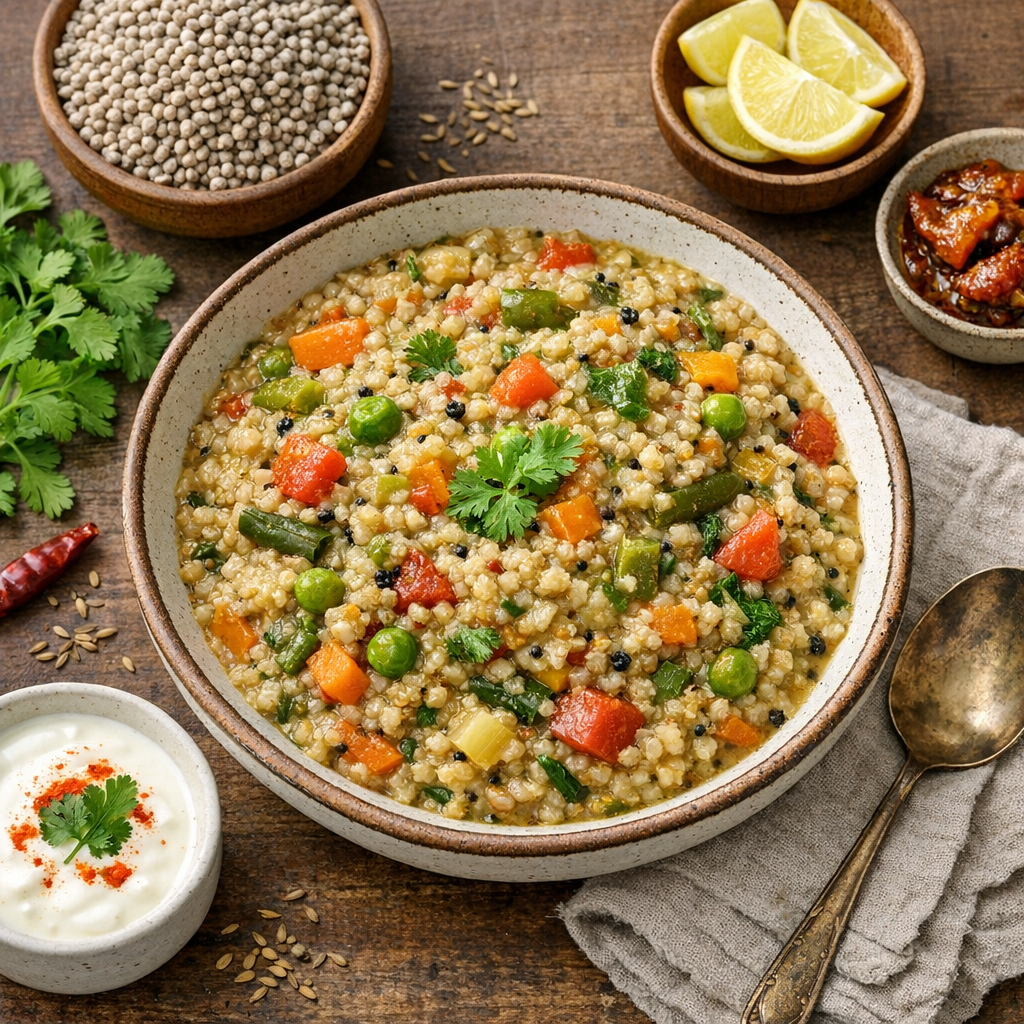
Healthy bajra dalia recipe — a filling, gluten-free one‑pot meal ready in about 30 minutes. High in fiber and plant protein, perfect for lunch or a light dinner.
Try this easy one‑pot pearl millet dalia for weight-loss friendly meals, diabetes-safe planning, and quick meal-prep.
Healthy Bajra Dalia Recipe | High Protein & Fiber Lunch/Dinner
Introduction
Ready in ~30 minutes and packed with fiber and plant protein, this healthy bajra dalia recipe is a simple, filling lunch or dinner for busy home cooks. It’s gluten-free, diabetes-friendly, and easy to scale for meal-prep. For more weeknight ideas, see our Easy Dinner Recipes Under 30 Minutes and Millet Recipes for Weight Loss.
- Prep time: 5 minutes
- Cook time: 25 minutes
- Total time: 30 minutes
- Servings: 3–4
- Difficulty: Easy (one‑pot)
- Primary keywords: healthy bajra dalia recipe, bajra dalia recipe, pearl millet dalia recipe
This one‑pot bajra dalia is ideal when you want a warm, comforting bowl that keeps you full longer. It’s great as a high fiber lunch recipe or a healthy dinner recipe with bajra.
Bajra dalia is broken pearl millet cooked as a savory one‑pot meal. For a soft, porridge-like texture, use 1 cup bajra dalia to 3–3.5 cups water, sauté aromatics and vegetables, then simmer 20–25 minutes (or pressure-cook 2 whistles). It’s gluten‑free, high in fiber and plant protein—ideal for a filling, healthy lunch or dinner.
What Is Bajra Dalia?
Definition and difference: bajra dalia vs bajra khichdi vs broken wheat dalia
Bajra dalia is broken pearl millet (pearl millet dalia) — small fragments of millet cooked like a porridge or khichdi. Bajra khichdi often mixes bajra with lentils (like moong) and is drier. Broken wheat dalia (dalia) is a different grain (broken wheat) and has a different texture; both are healthy but not the same grain.
Nutritional snapshot (fiber, plant protein, low-GI)
Pearl millet is high in dietary fiber and provides plant protein and slow-digesting carbs (low-GI). It promotes satiety and steady blood sugar—good for weight-loss bajra dalia plans and diabetes-friendly meals.
Why This Recipe Works
Flavor and texture balance (veg, spices, ghee/oil)
This recipe balances savory aromatics (cumin, onion, green chilli), tangy tomato, mixed vegetables, and a finishing touch of garam masala and ghee or oil. The result: hearty but not heavy — porridge-like or slightly drier khichdi-style, depending on water ratio.
Health benefits: weight loss, diabetes-friendly, gluten-free
High fiber increases fullness, helping portion control for weight loss. Slow-release carbs favor blood sugar stability, and because pearl millet is naturally gluten-free, this is a safe gluten-free bajra recipe option (avoid cross-contamination if sensitive).
Ingredients for Bajra Dalia
Main ingredients
- Bajra dalia (broken pearl millet): 1 cup (160 g)
- Water: 3–3.5 cups for porridge-like, 2.5 cups for drier khichdi
- Onion: 1/2 cup, finely chopped (~75 g)
- Tomato: 1/2 cup, chopped (~80 g)
- Capsicum (bell pepper): 1/2 cup, diced (~75 g)
- Carrot: 1/2 cup, diced (~60 g)
- Peas: 1/4 cup (~40 g); or frozen peas
Spices & seasoning
- Ghee 1–2 tbsp or oil (1–2 tbsp) — use ghee for flavor, oil for lower calories
- Cumin seeds: 1 tsp
- Green chilli: 1, slit (adjust to taste)
- Turmeric powder: 1/2 tsp
- Coriander powder: 1/2 tsp
- Garam masala: 1/2 tsp
- Salt: to taste
- Fresh coriander leaves: handful, chopped
Optional protein boosts and swaps
- Split moong dal: 1/4–1/2 cup (soaked) — adds protein and creaminess
- Tofu: 100–150 g, cubed — vegan protein option
- Cooked chickpeas: 1/2 cup — extra fiber and protein
How to Make Bajra Dalia Step by Step
Step 1: Prep (rinse & optional soak)
- Rinse 1 cup bajra dalia thoroughly under cold water until water runs clear. Optional: soak 15–30 minutes to reduce cook time and improve softness.
Step 2: Sauté spices & aromatics
- Heat 1–2 tbsp ghee or oil in a heavy-bottomed pan over medium heat. Add 1 tsp cumin seeds; once they sputter, add chopped onion and a slit green chilli. Sauté until onions are translucent (3–4 minutes).
Step 3: Add vegetables & spices
- Add 1/2 cup chopped tomato, 1/2 cup carrot, 1/2 cup capsicum, and 1/4 cup peas. Stir in 1/2 tsp turmeric and 1/2 tsp coriander powder. Cook 2–3 minutes until tomatoes soften.
Step 4: Add bajra dalia and water (exact ratios for textures)
- Add the rinsed bajra dalia and mix. Pour 3–3.5 cups water for a porridge-like consistency or 2.5 cups for a drier khichdi-style. Season with salt.
Step 5: Cook until soft
Choose your method:
Stovetop pan method
- Bring to a boil, then reduce heat to low, cover tightly, and simmer gently for 20–25 minutes. Stir once or twice to prevent sticking; add a splash of water if the dalia absorbs too quickly.
Pressure cooker method
- Close the lid and cook on medium-high until 2 whistles (approx. 8–10 minutes depending on your cooker), then allow natural pressure release for a softer texture. Open and stir; if thicker than desired, add a little hot water and simmer 1–2 minutes.
Finishing
- Stir in 1/2 tsp garam masala, a small knob of ghee (optional), and chopped coriander. Check salt and texture; rest covered 5 minutes before serving for best texture.
Troubleshooting (grain too hard, too watery, sticky)
- If too hard: simmer longer with lid on, or pressure-cook for an extra whistle.
- If too watery: simmer uncovered for a few minutes to reduce, or sprinkle a pinch of roasted besan (gram flour) to thicken slightly.
- If sticky: add 1–2 tbsp oil/ghee and stir gently to separate grains; cook on low to settle texture.
Recipe Notes
Water ratio
Use 1:3 to 1:3.5 (bajra dalia : water) for porridge-like, comforting texture. Use 1:2.5 for a drier khichdi where grains are separate but soft.
Soaking recommendation and effect on cook time
Soaking for 15–30 minutes cuts cook time by ~5–10 minutes and yields a softer texture. If short on time, rinse well and cook longer on low heat.
When to use ghee vs oil
Ghee adds richness and a traditional flavor; use 1 tsp for calorie control. Oil (olive or light vegetable) keeps it vegan and slightly lighter.
Pressure cooker timings by model
Older heavy cookers may need 3 whistles; modern stovetop pressure cookers often take 2 whistles. Electric pressure cookers (Instant Pot) can use 10–12 minutes high pressure with natural release. Adjust based on your appliance and soaking.
Tips & Tricks for Best Results
- Rinse thoroughly to remove dust and excess starch.
- Soak if you can — it improves softness and digestion.
- Chop vegetables uniformly for even cooking.
- Cook low & slow for creamier texture; pressurized cooking is faster but watch liquid ratios.
- Add hot water while reheating to refresh texture.
- Let the dalia rest 5 minutes off heat for better settling and flavor melding.
- For fluffy vs porridge-like: reduce water slightly for fluffier khichdi; use full 3.5 cups for porridge consistency.
Variations
Add moong dal for more protein
Mix 1/4–1/2 cup split moong (soaked 15–30 min). Reduce water by ~1/2 cup and adjust cook time — moong softens quickly and adds creaminess and protein (high protein bajra dalia).
Vegan version
Use oil instead of ghee. Add tofu or chickpeas for protein.
Spicy version
Add extra green chiles, or 1/4 tsp red chili powder. Finish with a squeeze of lemon to balance heat.
Mediterranean twist
Swap ghee for 1 tbsp olive oil, roast vegetables first, add lemon zest and a handful of fresh parsley instead of coriander for a different flavor profile.
Meal-prep bowls
Cook a large batch and store in the fridge. Reheat with a splash of hot water and top with fresh herbs, a dollop of yogurt or roasted veggies for variety.
Serving Suggestions
What to serve with
- Plain yogurt or cucumber raita
- Tangy pickle or lemon wedges
- Fresh green salad or steamed greens
Portioning for weight loss
Serve 1–1.5 cups per person with a side of salad or low-fat yogurt. Keep oil/ghee minimal and add lots of vegetables to increase bulk without many extra calories.
Health Benefits of Bajra Dalia
Fiber & satiety
High fiber content slows digestion and keeps you full, reducing snacking and supporting weight-loss plans.
Plant protein & amino-acid notes
Pearl millet provides plant protein; combining with moong dal or chickpeas improves the amino-acid profile for a more complete protein.
Low-GI and diabetes considerations
Slow-digesting carbs help avoid blood sugar spikes. Portion control and pairing with protein/vegetables make it a diabetes-friendly option.
Gluten-free suitability
Pearl millet is naturally gluten-free. Ensure there’s no cross-contamination in storage or cooking for celiac or highly sensitive diets.
Storage and Reheating
Refrigerator and freezing
Store in an airtight container in the fridge for 3–4 days. Freeze portions up to 1 month (use freezer-safe containers).
Reheat method
Reheat on the stovetop with a splash of water, stirring until hot. Microwave covered for 1–2 minutes, stirring halfway. Add fresh herbs and lemon after reheating.
Meal-prep tips
Cook larger batches and portion into containers. Keep wet toppings (yogurt, chutney) separate. Adjust moisture when reheating since dalia absorbs liquid over time.
Nutrition Estimate
Per serving (1 of 4 approximate):
- Calories: ~280–320 kcal
- Protein: ~8–12 g (higher with moong/tofu)
- Fiber: ~6–8 g
- Carbs: ~45–50 g
Nutrition estimates are approximate. For exact values, use your preferred nutrition calculator and adjust for substitutions.
FAQs
- What is bajra dalia made of?
- Broken pearl millet grains (pearl millet dalia), cooked like porridge or khichdi with vegetables and spices.
- Is bajra dalia good for weight loss?
- Yes—high fiber and low-GI carbs increase satiety and help control hunger when portioned and cooked with minimal oil.
- Can I make bajra dalia without a pressure cooker?
- Yes—stovetop method: simmer on low with lid for 20–25 minutes, stirring occasionally; add water as needed.
- What is the best water ratio for bajra dalia?
- 1 cup bajra dalia : 3–3.5 cups water for porridge; 1:2.5 for a drier khichdi texture.
- What vegetables go well in bajra dalia?
- Onion, tomato, peas, carrot, capsicum, spinach; finely chopped or uniformly diced for even cooking.
- Is bajra dalia gluten free?
- Yes—pearl millet is naturally gluten‑free, but avoid cross-contamination with wheat-containing products.
- Can I add moong dal to bajra dalia?
- Yes—add 1/4–1/2 cup split moong (soaked) and adjust water/cook time; increases protein and creaminess.
- How do I store leftover bajra dalia?
- Refrigerate up to 3–4 days (airtight); freeze up to 1 month. Reheat with a splash of water and fresh herbs.
Conclusion
Try this healthy bajra dalia recipe for a quick, filling lunch or light dinner — perfect for meal-prep, weight-loss, or diabetes-friendly meal plans. If you loved this, try our Vegetable Moong Dal Khichdi Recipe and subscribe for more millet dalia recipe ideas. Don’t forget to share and print the recipe card!
You can also watch the full recipe video below
Schema & On‑page Elements
Recipe schema fields to include
- totalTime, cookTime, recipeYield
- nutrition (calories, protein, fiber, carbs)
- recipeIngredient (full ingredient list)
- recipeInstructions (step-by-step)
- image alt text: “healthy bajra dalia with vegetables”
FAQ schema for the FAQ block
Include the FAQs above as FAQPage schema to increase the chance of rich results.
Suggested alt text
“healthy bajra dalia with vegetables” — use for final and step photos.
Internal links used in this post: Vegetable Moong Dal Khichdi Recipe, Millet Recipes for Weight Loss, Easy Dinner Recipes Under 30 Minutes.
Recipe and nutrition information are for guidance only. If you have specific dietary needs, consult a nutritionist.