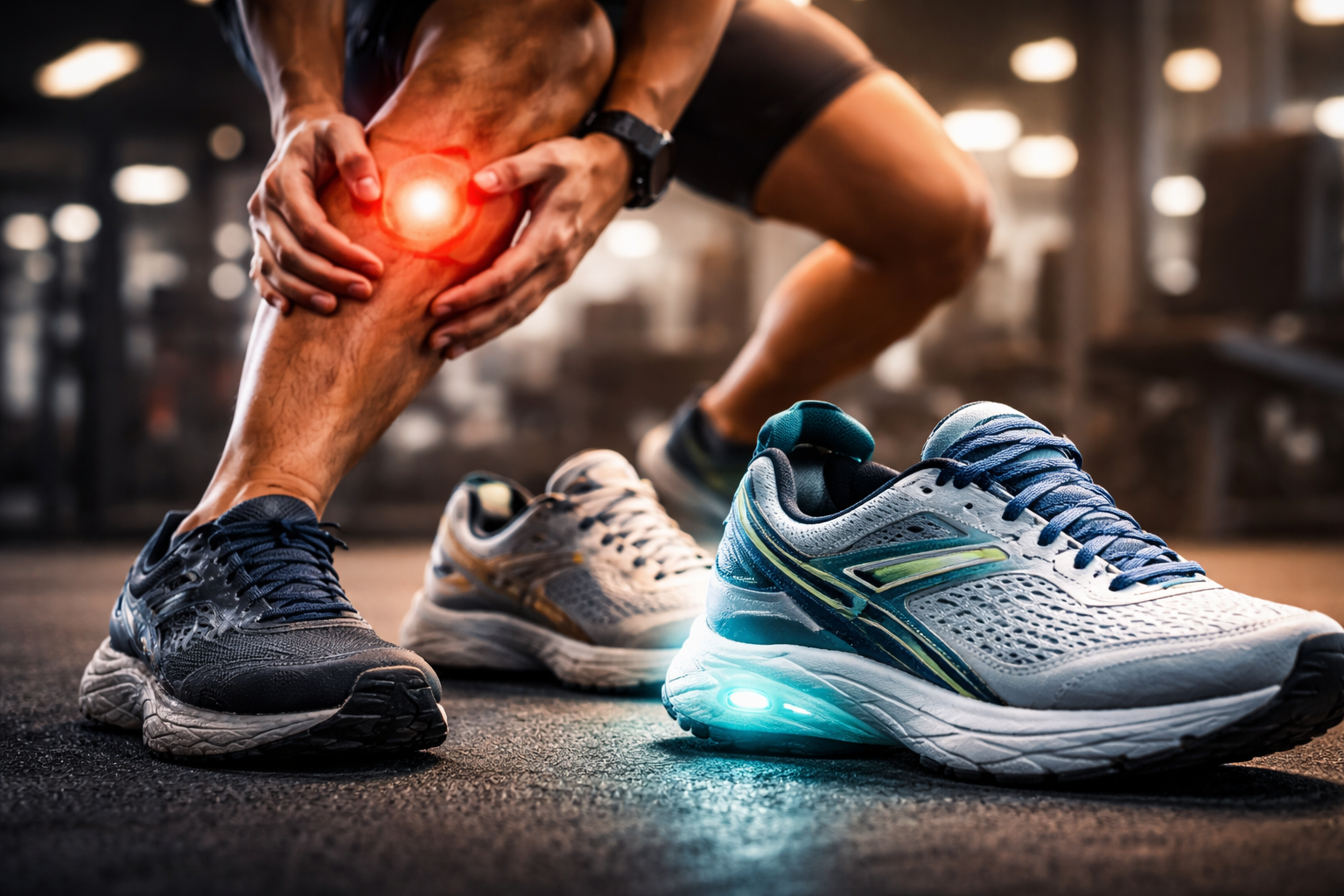
Best Shoes for Knee Pain Explained: 2026 Picks After 45
Best shoes for knee pain can change how you feel in every workout—especially after 45, when joints get less forgiving and small alignment issues add up fast. The right pair won’t “cure” your knees, but it can cut impact, steady your stride, and help you finish cardio or leg day without that sharp, nagging ache later.
In this 2026 guide, you’ll get clear picks for running and gym training, plus the simple checkpoints that matter most: shock absorption, cushioning level, stability, arch support, fit, and when to replace your shoes.
Quick summary (the 30-second answer)
If your knees flare up during workouts, look for shock absorption shoes with 100+ SA in the forefoot or 120+ SA in the heel, plus the right amount of stability for your gait. In 2026, most people over 45 do best with either (1) max-cushion shoes for impact-heavy cardio or (2) stable trainers for lifting and mixed gym sessions.
Why knee pain shows up more after 45 (and why shoes matter)
After 45, your joints usually tolerate less “slop.” Cartilage can thin, tissues recover slower, and your feet often change shape. For many people, feet widen, arches drop a bit, and swelling shows up by the end of the day. As a result, your knee may take extra load when your foot collapses inward (overpronation) or rolls outward (supination).
Good shoes help because they can reduce impact and keep your leg tracking cleaner. In other words, you want the foot, ankle, knee, and hip to stack better—especially when you run, jump, or do high-rep work on tired legs.
How I picked these: what matters most for knee relief
I focused on what actually changes knee stress during workouts. First, I looked for shock absorption strong enough to matter for heel strikes and treadmill work. Next, I looked for stability that controls collapse without forcing a stiff, awkward stride. Finally, I prioritized real-world fit: wide options, comfortable uppers, and platforms that feel steady under load.
- Shock absorption target: Aim for 100+ SA (forefoot) or 120+ SA (heel) if impact triggers pain.
- Cushioning type: Max cushion often helps arthritis or long cardio days. Moderate cushion can feel safer for lifting.
- Stability: Helpful if you overpronate or your knees drift inward. Too much can feel “blocky.”
- Arch support: Supports alignment and spreads pressure. Many people do best with removable insoles so they can add orthotics.
- Fit: Wide toe box and the right width reduce compensation patterns that can reach your knees.
Best shoes for knee pain (2026 top picks)
Below are the standouts for workouts when knee comfort comes first. I’ll be blunt about the tradeoffs, because “best” depends on how you train and how your foot moves.
1) Hoka Bondi 8/9: best max cushion for impact relief
If your knee pain spikes during running, treadmill incline, or long cardio sessions, the Bondi is the “turn the volume down” option. It’s known for ultra-thick cushioning (33mm+ stack), and it’s one of the easiest shoes to recommend when impact is the enemy.
- Best for: Heel strikers, heavier runners, arthritis stiffness, long gym sessions with lots of walking between stations
- Why it helps knees: Big cushioning can reduce the harsh landing that travels up to your knee
- Watch-outs: Not snappy for speed work; some lifters feel “too tall” under heavy squats
- Typical price: $160–170
If you want the latest Bondi specs and updates, check the official Hoka site for current Bondi details.
2) ASICS Gel-Kayano 30: best stability shoe for overpronation knee pain
If your knees cave inward when you fatigue, you usually need stability more than extra foam. That’s where the Kayano shines. It pairs soft landing feel with guidance that can reduce the “knee dives in” pattern that irritates the inner knee for many people.
- Best for: Overpronators, walkers who wear the inside heel fast, runners with inner-knee flare-ups
- Why it helps knees: Stability can improve alignment and reduce twist through the knee
- Watch-outs: Can feel narrow for some; stability feels strange if you’re a true neutral runner
- Typical price: $140–160
For model updates and fit notes, use ASICS official Gel series listings as a reference.
3) ASICS GT-2000 13: best “lighter stability” for daily workouts
Some people want support, but not a heavy, corrective feel. The GT-2000 line often hits that middle ground. It works well for treadmill runs, elliptical sessions, and brisk walking—especially if you want stability without feeling locked in.
- Best for: Mild-to-moderate overpronation, mixed gym + short runs
- Why it helps knees: Helps control foot roll that can stress the knee over time
- Watch-outs: If your pain is mostly impact-related, max cushion may feel better
- Typical price: $140–160
4) New Balance Fresh Foam X More v6: best soft landing for sensitive knees
If you want a plush ride but don’t love the “marshmallow wobble” some max-cushion shoes create, New Balance often feels steadier—especially in wider sizes. For many over-45 feet, that width choice alone can reduce knee irritation because it stops subtle twisting.
- Best for: Wide feet, swelling feet, long walks, easy runs, treadmill workouts
- Why it helps knees: Thick cushioning plus a predictable platform reduces impact spikes
- Watch-outs: Heavier feel; not ideal for fast intervals
- Typical price: $150–165
5) New Balance 1080 v15: best “all-around comfort” for knee pain
For many people, knee pain doesn’t require the most extreme shoe. It requires the shoe you’ll actually wear every day without hot spots. The 1080 line tends to deliver that: cushioned, friendly fit options, and a smoother feel for daily training.
- Best for: Daily trainers, mixed cardio, “one-shoe” buyers
- Why it helps knees: Balanced cushioning supports longer sessions with less joint irritation
- Watch-outs: If you overpronate strongly, consider a stability model like the 860 instead
- Typical price: $150–165
6) New Balance 860v14: best wide stability for over-45 feet
If you need stability and you also need width, the 860 series is often the easiest “problem solver.” Many people over 45 notice their toes need more room, and cramped shoes can change your gait. That gait change can show up as knee pain fast.
- Best for: Overpronators who need wide sizing, treadmill runners, long walkers
- Why it helps knees: Stability plus a non-pinching fit reduces compensations
- Watch-outs: Not as plush as a max-cushion shoe for long runs
- Typical price: $150–165
7) Brooks Ghost 15: best versatile pick for mild knee pain
If your knee pain is mild and shows up mostly when you overdo volume, the Ghost is a safe, predictable option. It’s cushioned enough for steady runs and comfortable enough for general gym work, without feeling unstable under bodyweight moves.
- Best for: Mixed workouts, short-to-medium runs, beginners returning to exercise after 45
- Why it helps knees: Moderate cushioning smooths impact without removing ground feel
- Watch-outs: If you want maximum impact reduction, the Bondi or More v6 may feel better
- Typical price: About $140
8) Skechers Arch Fit: best budget-friendly arch support for joint pain
Not everyone needs a premium running shoe, especially if your main goal is comfortable gym walking, light machines, and daily errands. Skechers Arch Fit models can feel great out of the box, and they’re often an easy win for people whose knees hate flat, unsupportive shoes.
- Best for: Casual gym use, walking, standing work, budget shoppers
- Why it helps knees: Arch support can reduce uneven loading through the leg
- Watch-outs: Less durable for high-mileage running; not a true performance trainer
- Typical price: $70–90
Running vs gym: pick the right tool for your workout
Many people make one mistake: they buy a super-soft running shoe, then use it for lifting. Soft cushion can feel amazing for knees on a treadmill, but it can feel unstable under squats and lunges. So, match the shoe to the work.
If your workout is mostly running or treadmill
- Prioritize shock absorption shoes and max cushioning.
- Choose stability only if you clearly overpronate or your shoes wear on the inside.
- Consider the Hoka Bondi or New Balance More v6 for impact-heavy sessions.
If your workout is mostly gym strength training
- Pick moderate cushioning with a stable base.
- Look for a secure heel and minimal side-to-side “squish.”
- If you need support, try ASICS Kayano or New Balance 860 over a very tall max-cushion shoe.
If you do mixed workouts (cardio + weights)
- Go “balanced” rather than extreme.
- Brooks Ghost and New Balance 1080 often work as a one-pair solution.
- Alternatively, rotate two pairs: max cushion for cardio days, stable trainers for leg day.
The 6 features that matter most for knee pain relief
1) Shock absorption (SA): your knee’s first line of defense
If impact causes your pain, SA matters more than brand. As a practical target, aim for 100+ SA in the forefoot or 120+ SA in the heel, depending on where you land. Heel strikers usually benefit from higher heel SA because that’s where the hit starts.
For lab-style comparisons and model roundups, see RunRepeat’s knee pain running shoes guide.
2) Cushioning level: max isn’t always “best”
Max cushion often reduces pain during cardio. However, too much softness can make you unstable, and that can irritate knees during side-to-side movements. So, if your knee pain shows up in the gym, test a moderate cushion shoe as well.
- Go max cushion if: arthritis stiffness, long walks, treadmill running, “impact hurts”
- Go moderate cushion if: you lift heavy, do classes, feel wobbly in plush shoes
3) Stability: great for pronation, wrong for some neutrals
Stability features can help if your foot collapses inward and your knee tracks inward. But if you’re neutral and stable shoes feel like they push your foot, you may end up fighting the shoe. That can create a new ache.
If you deal with arthritis and need guidance on supportive footwear, the Arthritis Foundation’s shoe guide offers a helpful, non-hype baseline.
4) Arch support (and when to add inserts)
Arch support helps distribute load more evenly. In practice, it can reduce the “one spot takes all the stress” feeling that often radiates to the knees. If you already use orthotics, prioritize shoes with removable insoles and enough depth so your heel still sits securely.
- If your arch collapses: try a stability shoe or add a supportive insert
- If your arch is high: focus on cushioning and avoid aggressive medial posts
5) Toe box width: small change, big alignment payoff
If your toes can’t spread, you lose stability. Then your foot looks for it elsewhere by twisting. Over time, that twist can show up at the knee. A slightly wider toe box often improves comfort within minutes.
Also, many people after 45 need a wider fit than they did at 30. So, don’t force your “old size.” Try wide versions when available.
6) Heel-to-toe drop: match it to your body
Drop can change how load travels up your leg. A higher drop can feel easier for some tight calves, while a lower drop can shift work to the ankle and calf. Because knee pain patterns vary, you should test what feels smooth rather than chasing a number.
Simple self-check: are you a pronator, neutral, or supinator?
You don’t need a lab to get a useful clue. Start with your old shoes.
- Overpronation signs: inside heel wears down fast; arches flatten; knees drift inward on squats
- Neutral signs: wear looks fairly even; stride feels straight; no strong inward collapse
- Supination signs: outside edge wears more; ankles roll outward; impact feels harsh
Then match the shoe:
- Pronator: ASICS Kayano 30, ASICS GT-2000 13, New Balance 860v14
- Neutral with impact pain: Hoka Bondi 8/9, New Balance More v6, New Balance 1080 v15
- Mixed workouts, mild pain: Brooks Ghost 15
Background: why “aging feet” change your knee comfort
Foot changes after 45 aren’t vanity issues. They’re mechanics. As connective tissue stiffens and the fat pad underfoot changes, you may feel more impact. Meanwhile, swelling can tighten shoes and alter your stride. Even a small change in how your foot lands can shift force into the knee.
That’s why the most common “knee pain shoe mistake” is buying a shoe that feels fine for five minutes, but cramps the toes or slides at the heel after 45 minutes. Comfort in the store matters. Comfort at minute 40 matters more.
Expert perspectives (and why they don’t always agree)
Podiatry viewpoint: alignment first
Many podiatrists focus on arch support and stability because controlling excessive motion can reduce knee stress. This makes sense if overpronation drives your pain. It also explains why some people feel instant relief in a Kayano-style shoe.
Sports medicine viewpoint: reduce impact, then build capacity
Clinicians who see lots of runners often prioritize cushioning and shock absorption, especially for heel strikers. They’ll also tell you shoes aren’t enough. You still need stronger hips, calves, and quads so your knee doesn’t take the whole load.
Coach viewpoint: pick the shoe that keeps your form clean
Coaches care about what happens when you fatigue. A shoe that feels stable early can feel sloppy later. So, the “best” shoe is often the one that keeps your knee tracking straight at the end of the session, not the one that feels coolest at the start.
For additional gait and shoe-selection context, Nike’s overview on running shoes for bad knees offers a useful, beginner-friendly breakdown.
What happens next: how to use shoes for real knee relief
Buying the right shoe helps, but you’ll get better results if you treat it like a system. Here’s the approach that tends to work fastest for active adults over 45.
Step 1: Stop “testing” shoes on your worst day
If your knee already hurts, every shoe feels bad. Instead, try new shoes on a decent day, then do short sessions first. A 15-minute treadmill walk can tell you more than pacing around your house.
Step 2: Use a two-shoe rotation if you can
Rotations reduce repeated stress. Plus, different foam feels can reduce hot spots. For example, use Bondi for cardio days and a stable trainer for leg day.
Step 3: Replace shoes before they “look dead”
Midsoles compress long before uppers fall apart. As a result, your knee may start aching even though the shoe looks fine. Most people should replace workout shoes every 300–500 miles, or sooner if pain creeps back.
Step 4: Recheck your fit every year
Your foot can change size. So can your preferences. If you’re suddenly buying wide shoes after years in standard width, that’s not a failure. It’s a smart adjustment.
Real-world scenarios: what to buy based on your workouts
You feel knee pain most on the treadmill
Go max cushion first. Treadmills can tempt you into longer sessions, and repetitive impact builds up.
- Try: Hoka Bondi 8/9 or New Balance More v6
- Tip: If you feel wobbly, switch to New Balance 1080 or a stable ASICS model
Your knees hurt during squats and lunges
Prioritize stability and a steady base. Too much plush foam can let your knee wobble as you descend.
- Try: ASICS Gel-Kayano 30, ASICS GT-2000 13, or New Balance 860v14
- Tip: Shorten your stance slightly and slow down. Shoes help, but control matters.
You get pain after workouts, not during
This often points to cumulative load and poor shock management. You might feel fine in the moment, then pay for it later.
- Try: New Balance 1080 v15 or Brooks Ghost 15
- Tip: Replace older shoes sooner than you think. “Fine” foam can still be dead.
You need wide sizing and easy comfort
Fit problems can create knee problems. If your foot slides, your knee compensates.
- Try: New Balance 1080 v15 or 860v14 in wide options
- Tip: Shop later in the day when feet are slightly swollen, then fit for that reality.
FAQs
1) What shock absorption level do I need for knee pain?
Aim for 100+ SA in the forefoot or 120+ SA in the heel, depending on where you land. If you’re a heel striker, prioritize heel SA because that’s where impact starts.
2) Are max cushion shoes always best for bad knees?
No. Max cushion often helps impact pain, but it can feel unstable for lifting or side-to-side work. If you feel wobbly, try a moderate cushion shoe with a stable base.
3) How often should I replace shoes for knee support?
Most people do best replacing shoes every 300–500 miles, or sooner if the midsole feels flat and knee pain returns.
4) Can stability shoes help or hurt knee pain?
They can do either. If you overpronate, stability often helps by improving alignment. However, if you’re neutral, aggressive stability can feel forced and may irritate your knee.
5) What are the best wide shoes for knee pain after 45?
New Balance models like the 1080 and 860 stand out because they offer multiple widths. That helps if your feet swell or your toes need more room.
6) Hoka vs. ASICS for gym knee pain: which is better?
Choose Hoka (Bondi) if impact drives your pain, especially during cardio. Choose ASICS (Kayano/GT-2000) if stability and knee tracking matter most during lifting and squats.
7) Do orthotics work with these shoes?
Yes. Many of these models include removable insoles, which makes it easier to use custom orthotics or supportive inserts for better arch support and load distribution.
8) What’s one quick test to know if a shoe will flare my knees?
Do a slow bodyweight squat in the shoes. If your knee caves inward or your foot feels like it collapses, you likely need more stability. If you feel harsh impact when you step, you likely need more cushioning.
Conclusion: the best pick is the one that keeps you training
Knee pain after 45 doesn’t mean you’re done with workouts. It usually means you need smarter inputs—starting with your shoes. If impact hurts, pick max cushion. If alignment breaks down, pick stability. Then reassess after a few short sessions, not one heroic workout.
If this helped, share this with someone who needs to know. Also, what’s your knee pain trigger—running, squats, or long walks? Drop a comment with your workout style and what you’ve tried, and bookmark this page for 2026 updates as new models land.