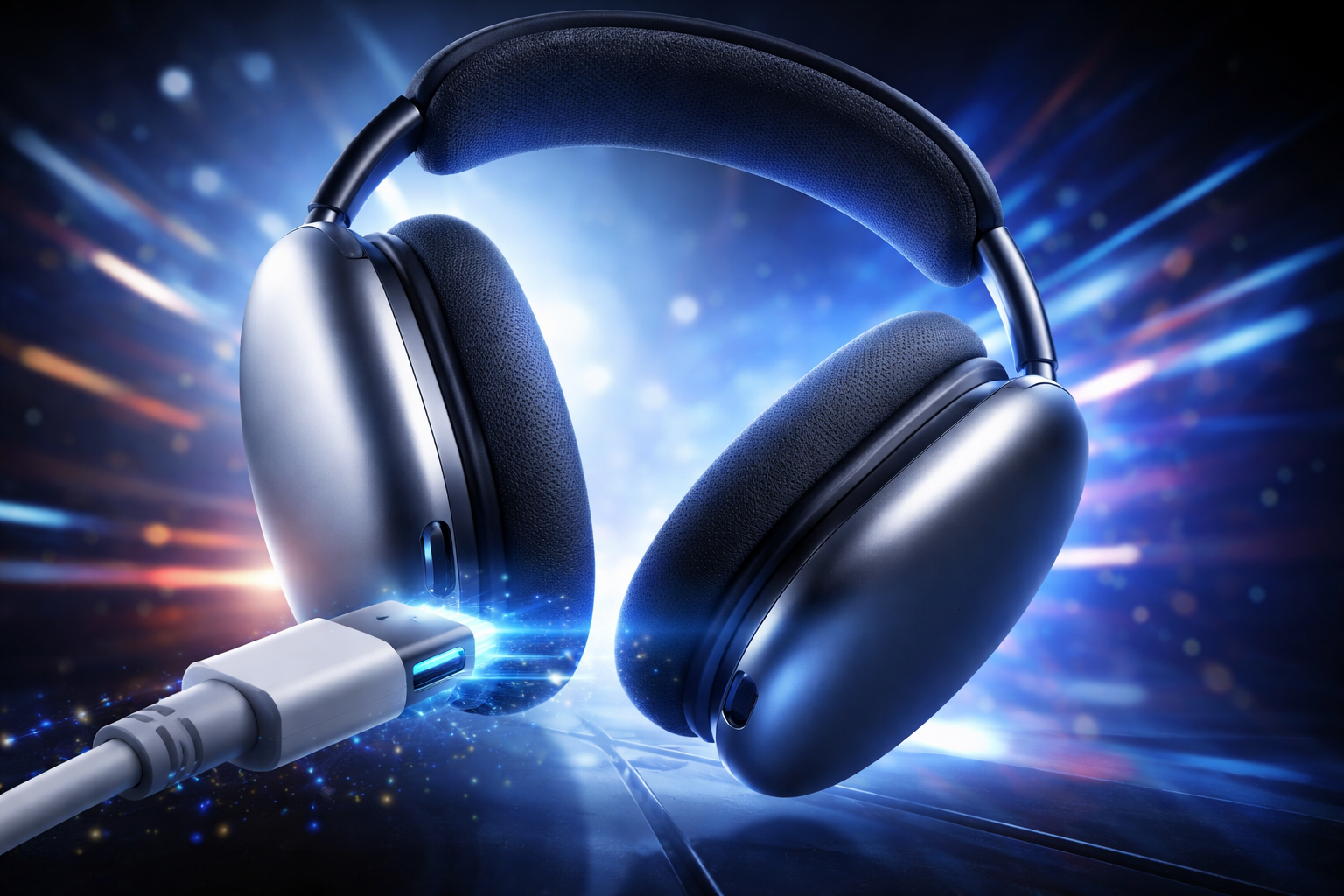
AirPods Max 2 Launch 2026 Explained: 7 Key Upgrades
The airpods max 2 launch is a bigger deal than it sounds. Apple waited about six years to give its most expensive headphones a true next-gen upgrade, and that long gap has made people understandably suspicious. Is this finally the “real” AirPods Max 2, or another small refresh?
Here’s the headline: AirPods Max 2 keeps the same $549 price and the same familiar design, but it jumps to the H2 chip, adds smarter audio features, and claims up to 1.5x better noise cancellation. Plus, USB-C is now standard, including lossless audio over a wired connection. That mix raises one practical question: should you buy now, upgrade, or wait?
Quick summary: what’s new in AirPods Max 2?
AirPods Max 2 (2026) upgrades to Apple’s H2 chip, which unlocks features like Adaptive Audio and Conversation Awareness, and Apple says it delivers up to 1.5x more effective ANC. It also supports USB-C and 24-bit/48kHz lossless audio when wired, while keeping the same $549 price and the same overall design.
AirPods Max 2 launch: dates, price, and colors
First, the basics people search for right after a launch: timing and cost. Apple kept pricing steady, which is rare for a premium product line in 2026.
- Price: $549 (same as Gen 1)
- Availability: Announced March 2026; pre-orders and release timing were widely reported in late March
- Colors: Midnight, starlight, orange, purple, and blue (varies by region and stock)
For the official feature list and Apple’s own claims (including the ANC improvement), see Apple’s AirPods Max 2 announcement. Also, for the pre-order and release timeline roundup, MacRumors’ date-and-details report tracks the key timing and specs.
The 6-year gap: why this update feels bigger than a spec bump
Apple launched the original AirPods Max in late 2020. Since then, the product stayed mostly frozen, which created two kinds of buyers: people who loved them, and people who kept waiting for “Max 2.”
Meanwhile, Apple did release a USB-C refresh in 2024. However, that version mainly swapped the port and added colors. It didn’t deliver the generational leap most people expected.
So, if you felt confused by the naming and timelines, you’re not alone. AirPods Max 2 in 2026 is the update that finally changes the core tech inside the headphones.
Upgrade #1: The H2 chip changes what Max can do
The H2 chip is the center of this launch. It matters because Apple’s smart audio features don’t come from magic drivers alone. They come from fast, on-device processing that reacts in real time.
With H2, AirPods Max 2 moves closer to feature parity with recent AirPods Pro generations. In other words, Apple now treats Max like a modern platform, not a legacy luxury accessory.
Reviewers who focus on Apple’s computational audio stack dig into the H2 advantages in more detail. For a technical breakdown, see 9to5Mac’s AirPods Max 2 review.
Upgrade #2: Apple claims up to 1.5x better ANC—when you’ll notice it
Apple says AirPods Max 2 delivers up to 1.5x more effective active noise cancellation. That’s a bold number, so the real question is: where does that show up in daily life?
Most people don’t “measure ANC.” They feel it in a few high-stress places:
- Airplanes: Engine roar sits in a stubborn band of low frequencies. Better suppression reduces fatigue on long flights.
- Trains and buses: Rumble plus intermittent squeals can leak through weaker ANC. Stronger ANC helps keep volume lower.
- Open offices: HVAC noise and distant chatter can drain your focus. Better ANC smooths that background layer.
However, it won’t turn a loud subway platform into silence. Instead, expect “less harsh” and “less tiring,” especially during long listening sessions.
Upgrade #3: Adaptive Audio is built for people who move around
Adaptive Audio sounds like a marketing phrase until you picture a normal day. You leave home with ANC on, you walk into a coffee shop, and suddenly you want to hear your name when your order is ready. Then you step back outside, and you want isolation again.
Instead of toggling modes every time, Adaptive Audio aims to adjust automatically. It blends noise control based on your environment and behavior.
Importantly, this feature lives and dies by your routine. If you mostly sit at one desk, you might not care. On the other hand, if you commute, run errands, or work in shared spaces, it can feel like a real quality-of-life upgrade.
Upgrade #4: Conversation Awareness can save you the “one earcup lift” habit
AirPods Max owners often do the same thing when someone talks to them: pause audio, lift an earcup, say “sorry, what?”, then put it back. Conversation Awareness tries to remove that friction.
When it detects you speaking, it can lower your audio and bring in outside sound so you can respond without fumbling controls. After that, it restores your listening.
Still, there’s a trade-off. Some people love automation. Others find it distracting when headphones “decide” something for them. So, it’s a win if you talk to coworkers or family while wearing headphones. Yet if you prefer total manual control, you may switch it off.
Upgrade #5: USB-C now matters for more than charging
USB-C is the obvious change, but the useful part isn’t just “one cable for everything.” AirPods Max 2 also supports 24-bit/48kHz lossless audio over USB-C when wired.
That sounds like an audiophile dream, but keep your expectations grounded:
- If you mainly stream compressed audio, you may not hear a dramatic difference.
- If you use Apple Music lossless and listen carefully, wired playback can sound cleaner, especially in busy tracks.
- If you bought AirPods Max for premium wireless listening, needing a cable may feel like a step backward.
For a more audio-focused perspective on what Apple is doing here, Darko.Audio’s feature breakdown dives deeper into listening implications beyond the spec sheet.
Upgrade #6: Better wireless stability and lower latency (especially for iPad/Mac)
AirPods Max 2 supports Bluetooth 5.3. In plain terms, that can mean a more stable connection and better efficiency in crowded wireless environments.
Also, Apple is leaning into lower latency modes for gaming and video. If you play on an iPad or Mac, even small latency reductions can make games feel more “connected,” and voices in video calls can feel tighter.
However, most casual listeners won’t upgrade just for latency. Think of this as a “nice to have” that stacks on top of the bigger H2 and ANC improvements.
Upgrade #7: A camera remote feature—useful, but niche
Apple added a camera remote function, with the Digital Crown doubling as a shutter button in supported workflows. On paper, it’s convenient.
In practice, it’s a narrow use case. You usually hold your phone when you take photos. Still, if you film hands-free videos, do fitness shots, or shoot group photos on a tripod, you might genuinely use it.
Just don’t buy AirPods Max 2 for this feature. Treat it like a bonus.
What didn’t change (and yes, it matters)
Apple didn’t redesign AirPods Max 2. The shape, materials, and overall look stay basically the same.
That means a few long-running complaints may still apply:
- Weight: If Gen 1 felt heavy after long sessions, don’t expect a miracle here.
- Knit mesh canopy: Some owners reported stretching over time. Apple hasn’t positioned Max 2 as a comfort overhaul.
- Portability: The “bra-style” case design remains a love-it-or-hate-it topic.
On the other hand, the unchanged design also means Apple didn’t gamble on fit. If AirPods Max already fits you well, you won’t have to “re-learn” the product.
AirPods Max 2 vs original (and the 2024 USB-C refresh)
This comparison clears up the biggest point of confusion in Apple headphones news right now: the 2024 model wasn’t “Max 2” in the way most people mean it.
- 2020 AirPods Max: H1 chip, baseline ANC, Lightning charging (at launch), Bluetooth 5.0
- 2024 AirPods Max (USB-C refresh): Mostly the same as 2020, but with USB-C and new colors
- 2026 AirPods Max 2: H2 chip, Apple’s newest smart audio features, claimed 1.5x ANC, Bluetooth 5.3, USB-C with lossless wired support
If you want a quick “what’s different” view from a mainstream hi-fi perspective, What Hi-Fi’s Max 2 vs Max comparison lays out the practical changes without getting lost in Apple-only language.
Should you upgrade? A simple decision framework
Now for the part that actually saves you money. The best choice depends less on specs and more on what frustrates you today.
Buy AirPods Max 2 now if…
- You don’t own AirPods Max yet and you want Apple’s best over-ear headphones.
- You travel often and you care most about stronger ANC.
- You want the newer smart features (Adaptive Audio, Conversation Awareness) and you’ll actually use them daily.
- You live in the Apple ecosystem (iPhone, iPad, Mac) and you value seamless switching and OS-level features.
Keep your original AirPods Max if…
- Your Gen 1 still sounds great and ANC was never a pain point.
- You mostly listen at home or in quiet spaces where ANC gains don’t matter.
- You hoped for a lighter design or a comfort overhaul (this isn’t that generation).
Skip Gen 1 discounts unless the price drop is real
If you find the original model heavily discounted, it can still be a good buy. But if the price sits near $549, Max 2 is the smarter long-term purchase because it upgrades the core platform (H2) rather than just swapping a port.
Wait for “Max 3” only if comfort is your dealbreaker
Some people want one thing: a lighter AirPods Max. If that’s you, waiting makes sense. Apple also tends to move slowly on major redesigns, so a future generation may bring a bigger physical change than Max 2 did.
Expert perspectives: the optimistic and the skeptical take
The optimistic view: Apple finally delivered the update AirPods Max needed. The H2 chip modernizes the experience, stronger ANC targets the biggest use case (travel), and the price didn’t jump. If you’ve been waiting since 2020, this is the cleanest “buy with confidence” moment the product line has had.
The skeptical view: The best improvements feel software-driven, not design-driven. The weight and long-term comfort concerns still loom, and lossless audio works only when wired. If you already own Gen 1 and you feel fine, Apple hasn’t given you a must-upgrade reason.
Both takes can be true. That’s why the “should you upgrade” answer depends on where you listen and what annoys you.
What happens next: what to watch after the launch
After any big Apple hardware release, the early story is always the same: specs, first impressions, then real-world durability. Over the next few months, a few signals will matter most.
- ANC reality checks: People will test whether “1.5x” feels consistent across planes, trains, and offices.
- Adaptive Audio behavior: Users will quickly say if it feels helpful or annoying.
- Long-term comfort: The headband mesh durability discussion will return, especially for heavy daily use.
- Deals: If retailers discount Gen 1 hard, it could become the “value pick,” while Max 2 stays the premium default.
If you’re on the fence, bookmarking this story and checking back after a month of real-world reports is often the smartest move.
FAQs
Is AirPods Max 2 worth buying if I already own AirPods Max?
It depends. If ANC is your biggest complaint, AirPods Max 2 looks like a meaningful upgrade. However, if you’re happy with Gen 1 and you want a lighter design, this generation may not feel urgent.
What’s the difference between the 2024 USB-C AirPods Max and AirPods Max 2?
The 2024 version mainly switched to USB-C and added colors. AirPods Max 2 adds the H2 chip, new smart audio features, and Apple’s claimed 1.5x ANC improvement.
Does AirPods Max 2 have better battery life?
No. Apple still rates it at about 20 hours, similar to the original model.
Do I need an iPhone for the new features?
For features like Adaptive Audio and other OS-level tools, yes. You’ll get the best experience with an iPhone, iPad, or Mac on the latest software.
Is lossless audio on AirPods Max 2 truly “wireless lossless”?
No. AirPods Max 2 supports lossless audio when wired over USB-C. Wireless listening still uses Bluetooth.
How much better is the noise cancellation in real life?
Apple claims up to 1.5x better ANC. You’ll likely notice it most in steady noise like airplane engines, train rumble, and office HVAC sound.
Should I buy AirPods Pro instead of AirPods Max 2?
If you want most of Apple’s smart audio features at a lower price and you don’t need over-ear comfort, AirPods Pro can make more sense. On the other hand, if you prefer over-ear isolation and a bigger soundstage feel, Max 2 is the better fit.
Conclusion: a real Gen 2 update, but not a redesign
The airpods max 2 launch delivers what many people wanted: a modern chip, smarter listening features, better noise cancellation, and USB-C that does more than charge. Just as importantly, Apple didn’t raise the price.
Still, Apple also didn’t fix the most debated physical issues. So, if you wanted lighter headphones, you may keep waiting. If you wanted a better Max experience for travel and daily use, Max 2 finally looks like the model to buy.
Share this with someone who’s debating the upgrade. Also, what’s your take: do you want smarter features, or do you want a lighter redesign? Drop a comment below and follow for more Apple headphones news as reviews and long-term reports come in.