US Iran Peace Talks Pakistan: 7 Proven Signals a Deal Is Near
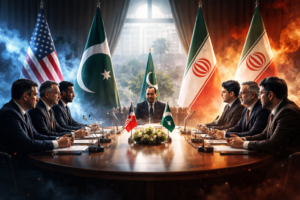
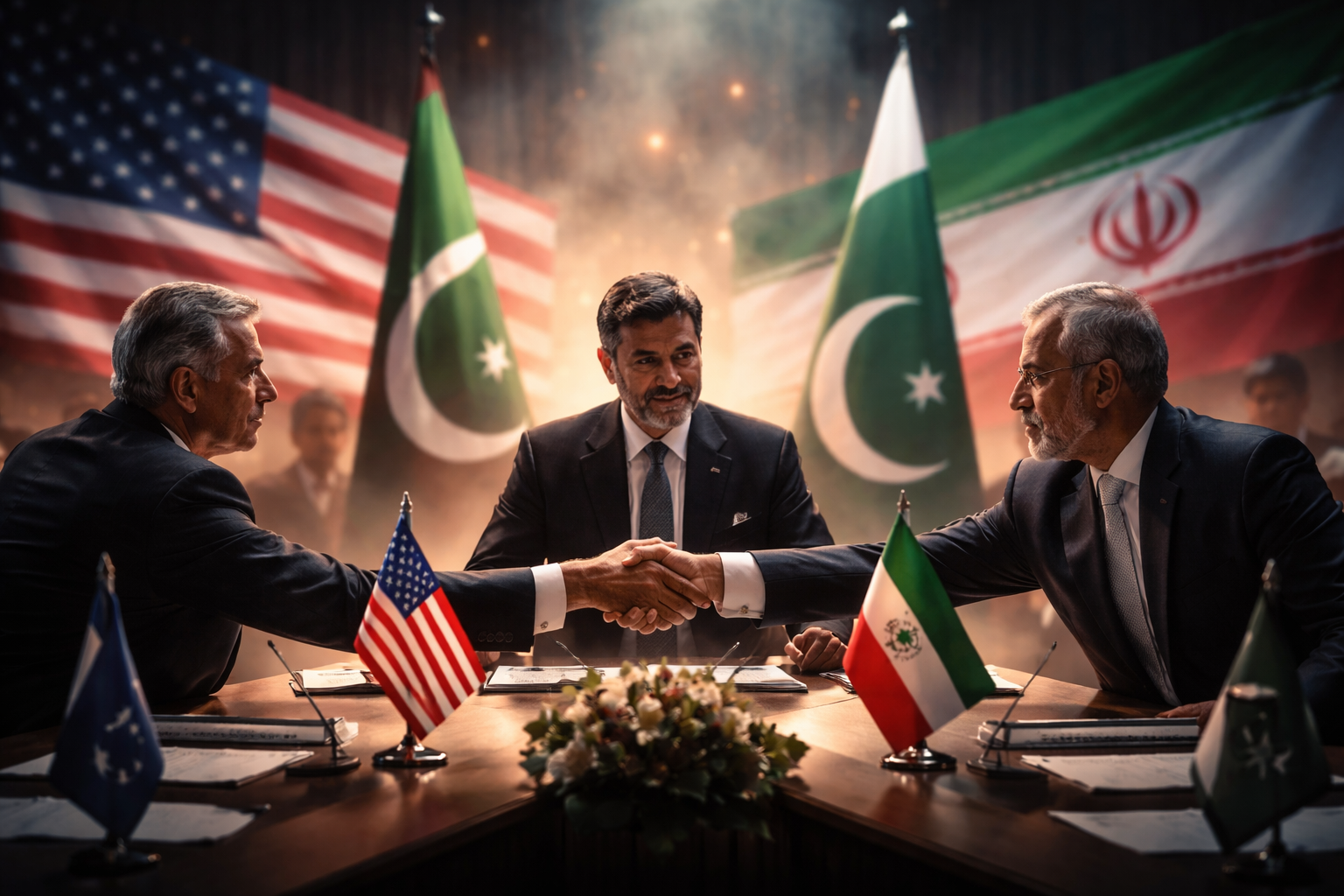
After six weeks of war and a ceasefire that still feels like it could snap at any moment, the phrase us iran peace talks pakistan has suddenly become the world’s most important “quiet headline.” Not because anyone expects a miracle handshake tomorrow—but because Islamabad is now hosting something we haven’t seen in decades: the highest-level, in-person diplomatic engagement linked to Washington and Tehran since 1979, even if it’s happening indirectly and behind closed doors.
What’s different this time is the mix of urgency (energy routes, regional escalation risks) and leverage (assets, ceasefire timing, maritime pressure points). What’s also different: Pakistan’s role is no longer just “a venue.” It’s the channel, the messenger, and—if the process holds—the country that can plausibly claim it helped stop the next spiral.
Below is the latest, the real signals that matter, the hurdles nobody should ignore, and how to read each update without getting whiplash from rumor-driven headlines.
Quick answer: what’s the latest in the Islamabad track?
The latest reported breakthrough in the us iran peace talks pakistan channel is a US agreement in principle to release frozen Iranian assets held in Qatar as a confidence-building step, alongside Pakistan-mediated indirect sessions in Islamabad (delegations in separate rooms). The ceasefire remains fragile, and major files—sanctions relief, nuclear questions, and regional security (including Lebanon and Strait of Hormuz dynamics)—are still unresolved. For official US-readouts, monitor the White House briefing room and the US State Department releases.
What makes these US-Iran talks in Pakistan historically unusual
Even when Washington and Tehran have engaged in past years, it’s typically been through intermediaries, discreet envoys, or limited-scope arrangements. What’s unfolding in Islamabad (as widely reported by regional and international outlets) is “high-level in-person presence” without “direct in-room negotiation”—a hybrid format Pakistan is managing through shuttle diplomacy.
- Highest-level presence in decades: Reports describe this as the most senior in-person engagement connected to both sides since 1979—still indirect, but politically weighty.
- War context: The talks follow a six-week conflict and a two-week ceasefire that’s being treated as a temporary pause, not a settled peace.
- Energy and maritime stakes: Any slippage around the Strait of Hormuz can ripple into global pricing and shipping risk premiums, which is why these talks matter beyond the region.
For broader, continuously updated context on regional flashpoints and maritime risk, track reputable rolling coverage such as BBC News.
Latest update timeline: who arrived, what was exchanged, what shifted
Because breaking-news reporting can be contradictory in real time, the cleanest way to understand “what happened” is to separate movement (arrivals, meetings, handoffs) from outcomes (concessions, verified commitments, official statements).
1) Delegations in Islamabad (reported): the who and why it matters
- US side (reported): Vice President JD Vance, special envoy Steve Witkoff, and Jared Kushner—arriving with a large support team (reports cite roughly 300). The sheer size signals a process built for rapid drafting, scenario planning, and media/strategic coordination, not a symbolic visit.
- Iran side (reported): Parliament Speaker Mohammad Bagher Ghalibaf and Foreign Minister Abbas Araghchi, arriving overnight amid low expectations—often a sign both sides want room to “climb down” without public pressure.
- Pakistan’s lead (reported): Prime Minister Shehbaz Sharif and Army Chief Field Marshal Asim Munir, central to the shuttle format and credited with keeping channels open during the ceasefire window.
Not every outlet will match on spellings, exact timings, or the composition of delegations. When in doubt, treat early details as “reported” until validated by official readouts.
2) The “15-point” package and counter-responses
Multiple reports describe Pakistan transmitting a 15-point US proposal to Iran and relaying Iran’s responses, including smaller counter-packages described as 5-point and 10-point sets. While the full text isn’t publicly verified, the repeated references suggest the process is structured—meaning negotiators are working from a checklist, not vague talking points.
That matters because structured proposals tend to produce the only kind of progress that survives headlines: sequenced commitments (step 1, step 2, verification, timing, enforcement).
3) The biggest confidence-building step: frozen assets (reported)
The most concrete breakthrough being discussed is a US agreement in principle to release frozen Iranian assets held in Qatar. In diplomatic terms, assets are more than money: they’re a “trust deposit” that can be paused, staged, or reversed depending on compliance.
For readers trying to separate “noise” from “signal,” this is a signal—if (and only if) it moves from “in principle” to a timed mechanism with conditions and verification.
Why Pakistan is mediating—and why its neutrality is debated
Pakistan’s pitch is straightforward: it’s a major regional actor, it has relationships across the Muslim world, it has hosted prior regional diplomatic activity, and it has a direct national interest in Gulf stability and de-escalation.
The controversy is also straightforward: some reporting suggests Islamabad has faced strong US pressure to broker the channel and “sell” proposal frameworks to Tehran. If the process collapses, critics could argue Pakistan wasn’t a neutral bridge—just a convenient conduit.
Pakistan’s credibility upside
- Regional convening power: Pakistan has hosted or facilitated discussions involving key regional states, strengthening the perception it can convene under pressure.
- Military-to-military influence: In tense environments, security establishments often carry more leverage than foreign ministries alone. That can help manage escalation risks faster than traditional diplomatic pacing.
- Geographic and political “middle” position: Not a Gulf monarchy, not a Western power, not Iran—yet connected to all.
Pakistan’s credibility risk
- Perception of being “used” by one side: If updates consistently show one-sided asks (e.g., ceasefire extensions) with weak reciprocity, neutrality narratives erode.
- If the ceasefire fails: Mediation reputations can rise quickly, but they can also collapse overnight if violence resumes during talks.
If you’re tracking Pakistan’s longer-term diplomatic positioning, you may also want this backgrounder: Pakistan’s Rising Role in Middle East Diplomacy: From Gaza to Iran Ceasefire.
7 proven signals the talks are moving from “contact” to “deal”
In high-stakes diplomacy, the biggest breakthroughs often don’t look dramatic. They look procedural. Here are the signals that usually precede a real agreement—especially when talks are indirect.
1) A dated sequence (not just “progress”)
Watch for a timeline: “within 72 hours,” “by day 10,” “after verification.” A real deal is calendar-based, not adjective-based.
2) Partial asset movement in tranches
Instead of a single headline “assets released,” expect stages: a limited release first, then larger tranches after compliance steps. If you see tranche language, that’s maturity.
3) Third-party verification language
When statements include “monitored,” “verified,” “inspected,” or name a mechanism—even a vague one—that’s progress. Without verification, ceasefires drift into blame games.
4) Ceasefire extension with enforcement detail
Extending from days to weeks matters less than how violations are handled. If updates mention joint incident rooms, hotlines, or defined retaliation limits, that’s a strong signal.
5) Maritime de-escalation steps tied to Hormuz
Look for phrasing around shipping lanes, escort reductions, exclusion zones, or operational “stand-downs.” Even limited maritime confidence steps can stabilize energy markets quickly.
6) Side-file containment (Lebanon, proxies, regional strikes)
If one side conditions progress on halting strikes in Lebanon (as reported), the question is whether negotiators create a “containment box” for that file—separating it from nuclear/sanctions tracks without ignoring it.
7) A shift from “indirect” to “direct” even for minutes
The first direct meeting is often short, symbolic, and heavily managed. But once it happens, it changes the political math—because it signals both sides believe there’s something worth owning publicly.
Comparison: what each side wants vs what each side can realistically give
Here’s the cleanest way to interpret the negotiation: differentiate stated goals (maximal positions) from tradable steps (what actually moves).
United States: likely priorities (as reflected in reporting)
- Extend and stabilize the ceasefire beyond a short window
- Reduce regional escalation and spillover risks
- Protect maritime traffic and prevent Hormuz disruptions
- Create a path to structured engagement without conceding core leverage too fast
Iran: likely priorities (as reflected in reporting)
- Sanctions relief trajectory (even if incremental)
- Asset access (especially frozen funds held abroad)
- Security guarantees or at least limits on strikes and escalation in theaters like Lebanon
- Political optics: avoiding the appearance of capitulation
Pakistan: what it needs for the mediation to “count”
- A measurable deliverable (ceasefire extension, humanitarian corridor, asset mechanism, maritime deconfliction)
- Public credit without public ownership: enough recognition to build credibility, not so much that it becomes the scapegoat
- A survivable neutrality narrative if talks stall
For outside analysis on how mediation affects regional alignments, browse institutional research hubs such as Council on Foreign Relations.
Decision guide: how to read the next 72 hours of headlines
Because this is informational and fast-moving, the “decision” for readers is really: what should you believe, what should you bookmark, and what should you wait to confirm?
If you see “assets release confirmed”
- Believe it only when there’s a mechanism: which assets, which bank/channel, what timing, what conditions.
- Watch next: whether it’s one-off or tied to staged compliance.
If you see “ceasefire extended”
- Ask: Is there an enforcement or verification layer?
- Watch next: whether Lebanon/Hormuz language is included or deliberately omitted.
If you see “Pakistan pressured by the US” narratives spike
- Interpretation: someone is managing domestic/foreign optics—or creating future blame insulation.
- Watch next: whether Pakistan issues a neutral, process-focused statement vs. taking ownership of outcomes.
If you see “no formal peace talks yet”
That can still be progress. Backchannel groundwork is often the only way to reach a point where a formal table is politically possible.
Want the bigger picture behind the Hormuz angle? This explainer may help: Strait of Hormuz Crisis: How the War Shook Global Oil Prices.
What could still derail the Islamabad channel (even after breakthroughs)
- Competing theaters: If violence escalates in Lebanon or elsewhere, it can overwhelm negotiation bandwidth.
- Domestic politics: Leaders may fear being seen as “soft,” especially if casualties remain fresh.
- Sanctions/nuclear linkage: If one side insists on bundling everything into one package, talks can freeze.
- Accidental incidents: A maritime incident, drone strike, or misattributed attack can collapse fragile trust in hours.
FAQs: US-Iran peace talks in Pakistan (latest)
What is the latest breakthrough in US-Iran peace talks in Pakistan?
The most reported breakthrough is a US agreement in principle to release frozen Iranian assets held in Qatar as a confidence-building step, alongside Pakistan-facilitated indirect sessions in Islamabad.
Why is Pakistan mediating US-Iran talks?
Pakistan is positioned as a regional mediator due to its diplomatic ties, interest in Gulf stability, and ability to run shuttle diplomacy. Reports also indicate external pressure and strategic incentives, which is why neutrality is debated.
Who leads the US and Iran delegations in Islamabad?
Reportedly, the US side includes VP JD Vance, envoy Steve Witkoff, and Jared Kushner, while the Iranian side includes Parliament Speaker Mohammad Bagher Ghalibaf and Foreign Minister Abbas Araghchi.
Is the US-Iran ceasefire holding during the Pakistan talks?
It’s described as fragile. While a two-week ceasefire created space for talks, key issues—regional strikes, maritime security, and longer-term guarantees—remain unresolved.
Are Pakistan’s mediation efforts truly neutral?
Pakistan presents itself as a neutral facilitator, but some reporting suggests it is also acting under pressure to transmit and advocate proposal frameworks, which can complicate perceptions of neutrality.
What happens if US-Iran talks in Pakistan fail?
Failure could increase the risk of renewed fighting, elevate threats to shipping routes (including Hormuz), and harm Pakistan’s credibility as a mediator. Even if talks fail publicly, backchannels can sometimes continue quietly.
Where can I verify official updates?
For US-side official context and statements, rely on the White House briefing room and the US State Department. For broader reporting and timelines, cross-check multiple outlets and avoid single-source “anonymous official” claims.
Conclusion: the breakthrough is real—so is the risk
Right now, us iran peace talks pakistan isn’t a neat “peace conference” story. It’s a pressure-valve story. The asset-release breakthrough (even “in principle”) suggests both sides see value in stepping back from the edge. But the ceasefire remains thin, the regional files are explosive, and the politics of blame are already forming in the background.
If you want to stay ahead of the headline churn, focus on the signals that tend to precede durable outcomes: dated sequences, tranche-based asset mechanisms, verification language, and any movement toward direct contact.
CTA: If you’re following this because stability affects markets, security, or regional policy, bookmark this page and check back for rolling updates—and consider subscribing to our breaking-analysis newsletter so you don’t miss the next confirmed step (or the first sign the channel is slipping).
Additional context on shifting alliances and high-level political signaling has also been discussed in outlets like Forbes (geopolitics section), which can be useful for reading the “why now” behind public endorsements and messaging.