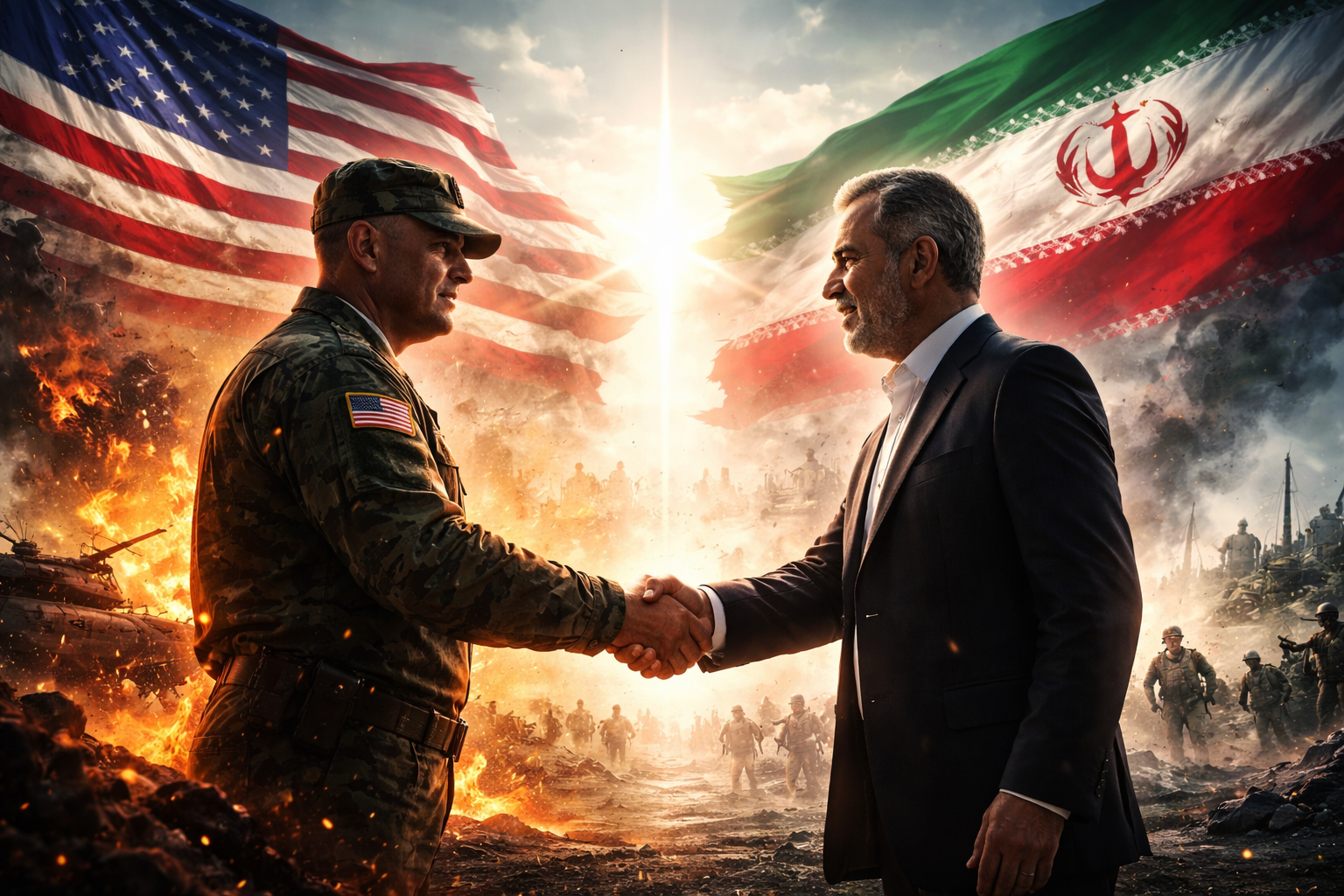
Why Iran US Ceasefire 2026 Happened: Hormuz Shock Deal
When the U.S. and Iran abruptly announced a ceasefire on April 8, 2026, it didn’t feel like “peace.” It felt like a timeout—called in the middle of a fight that was getting too expensive, too risky, and too globally disruptive to continue at the same intensity.
If you’re searching why iran us ceasefire 2026, you’re probably not looking for slogans. You want the real triggers: what changed on the battlefield, what changed in the oil market, who carried the messages, and what each side quietly needed.
Here’s the clearest way to understand it: the ceasefire wasn’t a grand reconciliation. It was a two-week transaction designed to stop the bleeding—especially around the Strait of Hormuz—while both sides tested whether a broader deal was even possible.
Quick Answer: Why Iran and the U.S. agreed in April 2026
The U.S.-Iran ceasefire in 2026 happened because both sides had urgent, overlapping incentives to pause. The U.S. wanted Iran to reopen the Strait of Hormuz (restoring global oil shipping and calming markets), while Iran wanted a halt to U.S. strikes after sustaining serious strategic damage and escalating economic pressure. Pakistan (with support from regional and global actors) helped mediate a limited, temporary two-week halt—because the bigger disputes (nuclear enrichment, sanctions, missiles, and proxy warfare) were still unresolved.
What the ceasefire actually was (and what it wasn’t)
The announcement on April 8, 2026 described a temporary, two-week halt to U.S. attacks in exchange for a specific Iranian step: reopening the Strait of Hormuz under conditions framed as “complete, immediate, and safe.”
That framing matters. It tells you the ceasefire was built around one measurable deliverable (Hormuz access), not around long-term political reconciliation.
- It was: a tactical pause, a pressure-release valve, and a test of compliance.
- It wasn’t: a permanent peace deal, a final nuclear settlement, or a full normalization of relations.
For timeline context, many public summaries reference Wikipedia’s 2026 Iran war ceasefire page, while deeper “what could break next” risk analysis is captured in the CSIS report on the ceasefire’s fragility.
Why iran us ceasefire 2026 centered on the Strait of Hormuz
If you only remember one driver, make it this: the Strait of Hormuz is the economic kill-switch. When it’s blocked or perceived as unsafe, energy markets react instantly—and governments get pressured domestically in days, not months.
Roughly 20–30% of global oil trade flows through the strait. During the 2026 conflict, the disruption wasn’t an abstract geopolitical storyline; it was a real-time global economic shock.
Why the U.S. treated Hormuz as “non-negotiable”
From the U.S. perspective, reopening Hormuz did three things at once:
- Lowered immediate global economic risk: calming price spikes and supply fears.
- Protected allied interests: because the pain lands on importers and partners fast.
- Created a clean “win condition” for a pause: a visible indicator the ceasefire had a purpose.
Reporting around the announcement repeatedly emphasized that reopening Hormuz was framed as the top priority; this was widely echoed in broadcast coverage such as this CBS News segment on YouTube.
Why Iran used Hormuz as leverage—and then backed off
Iran’s ability to threaten or disrupt shipping is one of its strongest asymmetric tools. Closing or constraining Hormuz signals: “You can strike us, but the global economy will share the cost.”
But that leverage has a ceiling. If the global cost climbs too high, Iran risks:
- broader diplomatic isolation (even from states that prefer neutrality),
- inviting more intense military pressure,
- turning energy-importing powers into active opponents rather than cautious bystanders.
So the ceasefire’s “Hormuz for pause” structure gave Iran a way to trade de-escalation for breathing room—without publicly admitting it was forced to concede under pressure.
The battlefield and strategic damage: the quiet push toward de-escalation
Ceasefires often happen when both sides claim they’re winning—and both privately recognize the next phase could be worse than the last.
According to widely cited summaries of the conflict, Iran faced strategic damage from U.S./Israeli strikes affecting key capabilities (including elements tied to missiles and nuclear infrastructure). That doesn’t mean Iran was “defeated.” It means the marginal cost of continuing at the same tempo rose sharply.
In that context, a two-week halt offered Iran a chance to:
- reduce incoming strike pressure and protect remaining assets,
- reposition diplomatically via a mediated channel,
- reframe the narrative domestically as a “victory” that forced the U.S. to pause.
Background on how the war was publicly rationalized—especially around nuclear risk narratives—can be found in summaries like Wikipedia’s rationale entry, though the core point for ceasefire logic is simpler: pressure plus risk created a moment where a limited bargain was mutually useful.
The negotiation channel: why Pakistan mattered (and why others hovered)
One reason this ceasefire happened quickly (and in a narrow format) is that it ran through a mediator capable of carrying messages without forcing either side into a public, politically humiliating process.
Pakistan’s reported mediation role fits classic ceasefire mechanics:
- It provides face-saving distance: neither side has to look like it’s negotiating “directly.”
- It speeds up tactical coordination: timelines, verification, sequencing.
- It reduces miscalculation: preventing a pause from collapsing due to misunderstandings.
Other actors were reportedly involved or influential in the background—often in the way modern diplomacy works: multiple states applying nudges, offering venues, or shaping incentives without owning the deal.
The proposal chess: why earlier plans failed
Before the two-week ceasefire, larger proposals reportedly floated—and stalled—because they demanded too much, too fast, on issues that cut to core regime security and U.S. credibility.
Public reporting described:
- a rejected U.S. multi-point proposal with longer timelines,
- Iranian counter-plans that emphasized security guarantees and limits on future attacks (including in the proxy arena).
That pattern is normal: comprehensive peace frameworks fail first; narrow “stop the most dangerous part” ceasefires succeed earlier.
What each side really wanted (beyond the headlines)
To understand the reasons for iran truce and the broader us iran peace deal dynamics, separate immediate objectives (what the ceasefire explicitly covered) from strategic objectives (what both sides still want long-term).
U.S. objectives
- Immediate: restore shipping through the Strait of Hormuz and reduce global oil shock risk.
- Strategic: constrain Iran’s nuclear weapons potential, degrade missile capabilities, and curb proxy support.
- Political: show measurable results quickly (a reopened strait is easy to message).
Iranian objectives
- Immediate: stop or reduce strikes, preserve remaining military capacity, and stabilize internal conditions.
- Strategic: protect the right to uranium enrichment, keep deterrence credibility, and gain leverage on sanctions relief.
- Political: avoid the appearance of capitulation—especially if concessions are made.
This is why the ceasefire was structured as “two weeks + one clear deliverable” rather than “grand bargain.” It’s a test: can either side comply on something narrow enough to verify?
Comparison: 2026 ceasefire vs. what a real peace deal would require
People often ask if the ceasefire means “peace is coming.” The honest answer: a ceasefire is a doorway, not a destination. Here’s the practical difference.
| Element | 2026 Ceasefire (Two-Week Halt) | Permanent US-Iran Peace Deal |
|---|---|---|
| Main focus | Reopen Strait of Hormuz; pause U.S. attacks | Nuclear limits, sanctions, missiles, proxies, verification |
| Time horizon | Short and reversible | Multi-year with enforcement mechanisms |
| Verification | Observable shipping access and reduced strikes | Inspections, monitoring, compliance triggers |
| Political difficulty | Lower (tactical, face-saving) | High (identity-level and security-level issues) |
| Failure cost | Strikes resume; strait re-threatened | Collapse can trigger wider regional escalation |
For broader conflict context and timeline framing, see Britannica’s 2026 Iran war overview.
Why the ceasefire was temporary: the unresolved “deal-breaker” issues
The ceasefire’s short duration wasn’t an accident. It reflected the reality that the hardest issues weren’t solved—only postponed.
1) Nuclear enrichment and “rights” vs. “limits”
This remains the core philosophical clash: Iran frames enrichment as a sovereign right; the U.S. frames limits as essential to preventing weaponization. Even when technical compromises exist on paper, domestic politics in both countries can make them impossible to sell.
Think-tank analysis like the CSIS watchpoints repeatedly flags nuclear verification and sequencing as prime failure points because each side fears getting trapped in a one-sided concession cycle.
2) Sanctions relief vs. compliance sequencing
Iran wants relief quickly (and often up front) to prove negotiations are worth it. The U.S. typically wants compliance first, then relief in stages. That sequencing fight can kill deals even when both sides want a deal.
3) Missiles and deterrence
Missiles are not just weapons; they’re a deterrence identity for Iran. U.S. pressure to curb ballistic capabilities strikes at how Iran tries to prevent regime-threatening scenarios.
4) Proxy warfare across the region
Even if the U.S. and Iran stop direct strikes, conflict can continue through partners and proxies—especially in Lebanon, Iraq, Yemen, and maritime zones. This creates “ceasefire sabotage” risk: a single incident can restart escalation even if top leaders prefer restraint.
Decision guide: how to interpret the ceasefire (without getting fooled)
If you’re trying to decide what this ceasefire means—and whether it’s likely to hold—use this simple checklist.
A. Watch Hormuz compliance first
- Are transits increasing under “safe” conditions?
- Are insurance rates and shipping advisories easing?
- Are there new incidents, seizures, or ambiguous “near misses”?
B. Track strike tempo and attribution
- Did direct U.S. strikes pause completely, or just shift targets/methods?
- Are there proxy attacks that either side can plausibly deny?
C. Look for Phase 2 signals
- Are there scheduled talks with a clear agenda (nuclear, sanctions, verification)?
- Do both sides repeat the same “bottom line” publicly (a sign they’re dug in)?
- Do mediators expand the table (often needed for enforcement)?
Practical takeaway: a ceasefire built around one concrete deliverable can hold short-term, but it only becomes durable when the nuclear/sanctions/missile/proxy stack is addressed with enforceable sequencing.
FAQs
Why did Iran agree to the 2026 ceasefire with the US?
Iran agreed largely because continuing escalation carried rising strategic and economic costs. After sustaining significant damage from strikes and facing intense pressure tied to the Strait of Hormuz disruption, a temporary truce offered a way to halt attacks, regain diplomatic maneuvering room, and pursue leverage on sanctions and security guarantees.
What was Trump’s main condition for the Iran truce?
The central U.S. condition was Iran’s commitment to the “complete, immediate, and safe” reopening of the Strait of Hormuz—because restoring oil flow reduces global economic shock and removes a major escalation trigger.
Who mediated the US-Iran peace deal in 2026?
Pakistan was widely described as the key mediator, with other states playing supporting roles behind the scenes. The mediation structure helped both sides communicate and de-escalate without requiring politically costly direct negotiations.
Is the 2026 Iran ceasefire permanent?
No. It was announced as a fragile, two-week temporary halt. A permanent deal would require broader agreements on nuclear limits, sanctions relief, missiles, and proxy conflict—areas that remain contested.
What are the reasons for Iran truce connected to nuclear issues?
The nuclear issue is central but unresolved. The U.S. wants constraints and verification that prevent weaponization, while Iran insists on enrichment rights and seeks guarantees against future attacks—making nuclear sequencing a likely make-or-break issue.
How does the 2026 ceasefire relate to the Strait of Hormuz?
Hormuz was the immediate trade: Iran reopening the strait in exchange for a pause in U.S. attacks. Because the strait carries roughly 20–30% of global oil trade, its disruption rapidly affects prices, shipping risk, and political pressure worldwide.
What happens if the 2026 US-Iran ceasefire fails?
If it fails, the most likely immediate outcomes are a return to U.S. strikes, Iranian retaliation through regional partners or maritime pressure, and renewed threats to shipping through Hormuz—recreating the same escalation-and-economic-shock cycle that pushed both sides toward a pause.
Conclusion: a truce built for urgency, not harmony
The clearest answer to why iran us ceasefire 2026 is that both sides faced a fast-growing cost curve—and the Strait of Hormuz turned that cost curve into a global emergency. The U.S. wanted oil flows restored and escalation risk reduced. Iran wanted strikes paused and a path back to negotiation leverage.
But the ceasefire’s short timeline tells you something just as important: the real disputes haven’t been solved—only temporarily contained. If you’re following this because energy markets, regional stability, or nuclear risk matters to you, treat the ceasefire as a live experiment, not a final outcome.
Want the most reliable way to stay ahead of the next swing? Keep your focus on Hormuz shipping conditions, verified changes in strike activity, and whether Phase 2 talks move from symbolism to enforceable sequencing on nuclear and sanctions issues.