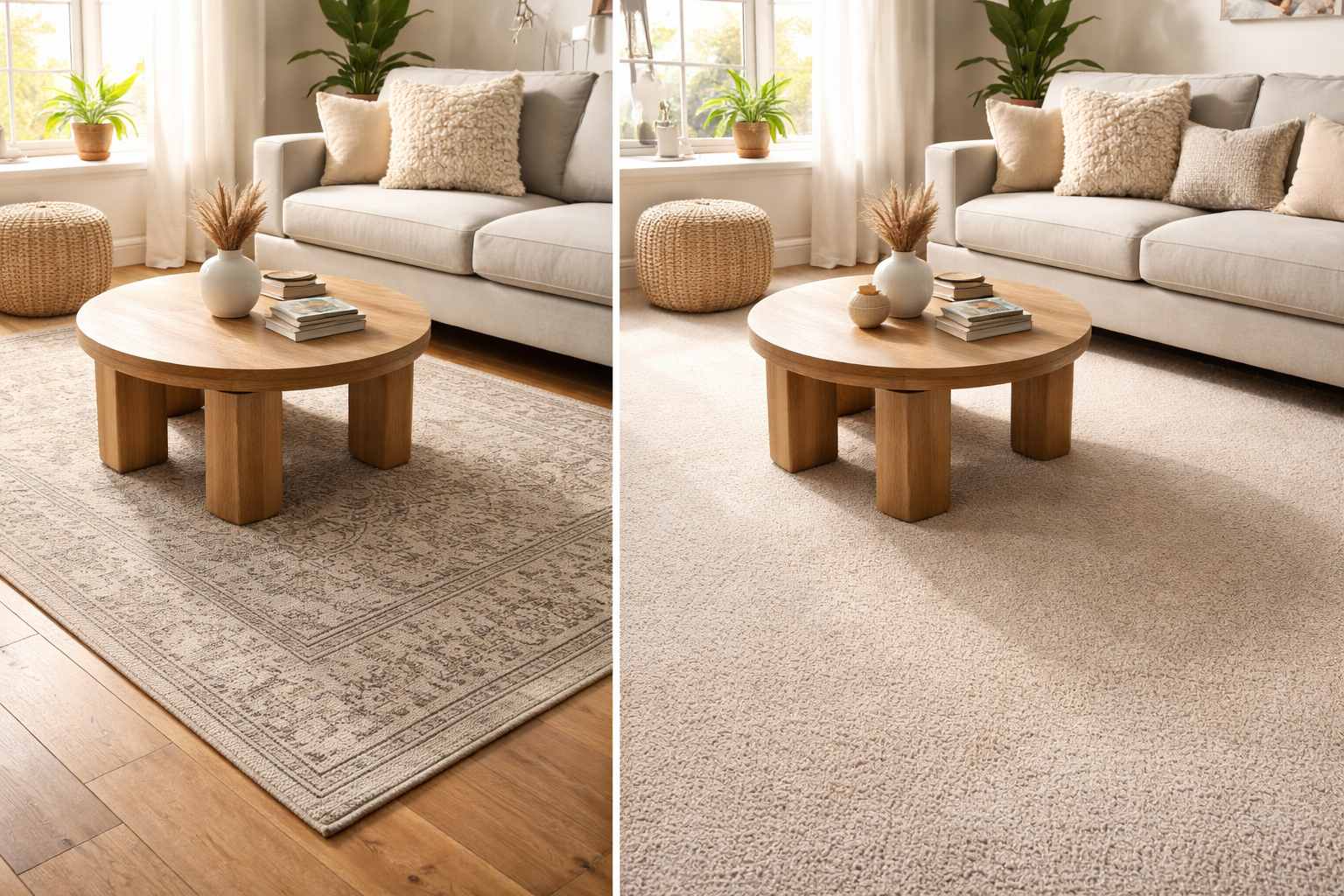
Rugs vs Carpets: Floor Decor Face-Off for Homes (What’s Best for Your Space in 2026?)
Rugs vs carpets is one of those “small” home decisions that can quietly change how your whole place feels. Too cold underfoot? Too echo-y? Sick of stains that never fully disappear? Or maybe you’re renting and want a big style upgrade without committing to a permanent install.
The good news: you don’t need a designer budget to make the right call. You just need to match the option to your lifestyle (pets, kids, allergies, humidity, cleaning habits) and the way you actually use each room. This guide breaks it down clearly—plus gives you a simple decision shortcut so you can buy once and feel confident.
Quick Answer: Rugs vs Carpets (Summary)
Carpets are wall-to-wall, professionally installed, and best when you want maximum warmth, noise reduction, and a uniform look—especially in bedrooms and family homes.
Rugs are portable, flexible, and ideal for renters, open-plan spaces, and anyone who wants easier cleaning and quick style changes without permanent flooring commitment.
Rugs vs Carpets: The Real Difference (Beyond “One Is Bigger”)
Most people think this is simply a size debate. It’s not. The area rug vs carpet decision affects your comfort, acoustics, cleaning workload, allergy control, and even how often you’ll want to redecorate.
1) Coverage & Room Impact
- Carpet: Covers the entire room wall-to-wall. The whole space feels softer and warmer.
- Rug: Covers a zone (like under a sofa set, beside the bed, or under a dining table) while showing the floor around it.
If you want “hotel cozy,” carpet gets you there fast. If you want “styled and layered,” rugs win on design flexibility.
2) Installation & Commitment
- Carpet: Typically needs tack strips, stretching, and underlay/padding. Translation: more labor, more permanence.
- Rug: Roll it out. Add a rug pad. Done.
This is why rugs are such a cheat code for rentals or anyone who changes their mind every season.
3) Portability (The “Moving House” Factor)
Rugs are furniture. You can take them with you, move them from room to room, and switch layouts. Carpet is basically part of the building.
That portability is also why rugs are a smart investment for students, young professionals, and anyone in “not my forever home… yet” mode.
Cost in 2026: Which Is Cheaper—Rugs or Carpets?
Cost is where rugs vs carpets gets interesting. Because carpet can be cheap per square foot, but installation and padding add up quickly.
Typical Price Ranges (Realistic Budgeting)
- Carpet materials: ~$1–$5 per sq ft (premium wool is more)
- Carpet installation: ~$1–$3 per sq ft (plus underlay/padding in many cases)
- Rugs: ~$50–$500+ (small to mid synthetic/machine-made), and $1,000–$10,000+ for large handmade wool/silk statement pieces
One helpful reference point: Flooring experts commonly note rugs can come out 20–50% cheaper than an equivalent installed carpet setup (especially once you include labor), depending on materials and room size. For a practical overview, see Flooring America’s comparison.
Simple Cost Shortcut (No Calculator Needed)
- If you’re covering one zone (sofa area, bed area, entry): rugs are almost always the better value.
- If you’re covering multiple big rooms and want a consistent feel: carpet can be more economical per square foot—just don’t ignore install costs.
Buyer tip: If you’re on the fence, start with a great rug + pad. It upgrades your flooring decor immediately, and you can always go wall-to-wall later if you still want it.
Comfort, Warmth & Noise: Which Feels Better Day-to-Day?
This is where carpets often win—especially if you’re barefoot at home, work from your bedroom, or hate echo.
Carpet Comfort Advantages
- Warmth: Better insulation than hard floors with a rug on top.
- Cushion: Softer landings (helpful for kids and older adults).
- Sound absorption: Less footstep noise, less “empty room” echo.
Rug Comfort Advantages
- Targeted comfort: Put softness exactly where you stand/sit most.
- Layering: Add a thicker rug pad to get surprisingly close to carpet comfort.
- Seasonal swaps: Use a flatweave in summer, plush in winter.
If your space feels loud, rugs help—but carpet is the “whole-room acoustic treatment.”
Cleaning & Maintenance: Rugs vs Carpets for Real Life (Pets, Kids, Spills)
Maintenance is where many people change their mind. A carpet can look amazing on day one—and then life happens.
Rugs: Easier to Control, Easier to Replace
- Many modern rugs are spot-clean friendly, and some are machine-washable.
- You can take a rug out for deep cleaning, beating, or professional wash.
- When a rug is beyond saving, you replace one item—not the whole room.
If you want maximum low-stress ownership, rugs are hard to beat.
Carpets: Consistent Cleaning, Occasional Deep Cleaning
- Carpet needs frequent vacuuming (especially with pets).
- Deep cleaning is harder (you can’t remove it), so you’ll likely schedule professional cleaning.
- Stains can become “permanent memories,” especially in high-traffic lanes.
Allergy note: Many cleaning pros and flooring specialists point out carpets can trap more dust, allergens, and pet dander than hard floors with removable rugs. If allergies are a major concern, rugs on hard flooring can be easier to manage—especially when paired with a good vacuum and washable options.
Durability & Lifespan: What Actually Lasts Longer?
People often assume carpet lasts longer because it covers everything. But lifespan is more about traffic patterns and materials.
Carpet Lifespan (Typical Reality)
In busy homes, many carpets show significant wear within 5–15 years, especially along hallways and “walk lines.” Replacing it means moving furniture and paying installation again.
Rug Lifespan (Quality Matters More)
A high-quality rug—especially wool—can last decades. Some well-made pieces are repairable and restorable, which changes the value equation completely. If you’re curious about the traditional distinctions and long-term value of quality rugs, Nazmiyal Antique Rugs’ guide offers helpful context on rug vs carpet definitions and heritage.
Practical takeaway: If you have heavy traffic, replacing a rug is simpler than replacing an entire room of carpet.
Style & Flooring Decor: Which Looks Better?
This depends on what you want your room to “say.”
Rugs = Instant Personality
- Add pattern, color, and texture without changing floors.
- Define zones in open-plan homes (living + dining in one space).
- Create a focal point—especially with a bold area rug.
Carpets = Calm, Uniform, Finished
- Creates a clean, seamless base.
- Makes a room feel cohesive (especially upstairs and bedrooms).
- Great for stairs and odd-shaped rooms where rugs feel fiddly.
If your goal is statement decor, rugs usually win. If your goal is a consistent “built-in” feel, carpet does that effortlessly.
Room-by-Room Recommendations (What Most People Get Wrong)
Living Room: Area Rug vs Carpet?
Most living rooms do better with a rug, not wall-to-wall carpet—because you can anchor seating, add texture, and replace it when styles change.
- Choose a rug if you want zoning, flexibility, and easier upgrades.
- Choose carpet if your living room is also your movie room and you want maximum cozy + quiet.
Bedroom: Carpet Often Wins
Bedrooms are where carpet shines: warm feet in the morning, softer acoustics, and a calmer look.
- Carpet if you want comfort and warmth across the whole room.
- Rug if you prefer hard floors for cleanliness and just want softness near the bed.
Dining Area: Rugs (But Be Smart)
Carpet under a dining table is a stain magnet. A rug can work beautifully—just choose low-pile and cleanable.
- Go low-pile so chairs slide easily.
- Size it so chairs stay on the rug even when pulled out.
Entryway & Hallway: Rugs Beat Carpet
These are dirt zones. A durable runner rug is easier to shake out or replace than installed carpet.
Rental Homes / PGs / Shared Apartments: Rugs, 100%
For renters, rugs are the fastest upgrade with the least risk. Add a non-slip pad and you’ve got comfort, style, and portability without upsetting a landlord.
Product Face-Off: Carpets vs Rugs (Pros, Cons, and Who Should Buy What)
Option 1: Wall-to-Wall Carpet
Best for: Bedrooms, family homes, anyone prioritizing warmth and quiet.
- Pros: Cozy underfoot, better sound absorption, uniform look, safer for slips/falls.
- Cons: Harder to deep clean, can hold allergens, permanent installation, replacement is a bigger project.
Option 2: Area Rugs (On Hard Floors)
Best for: Living rooms, rentals, open plans, decor lovers, frequent rearrangers.
- Pros: Portable, easy to swap, easier cleaning options, strong style impact.
- Cons: Slip risk without pad, doesn’t fully insulate the whole room, premium rugs can be expensive.
Option 3 (Underrated): Rug Over Carpet (Hybrid Setup)
Yes—you can absolutely layer a rug on top of carpet. It’s a great move when you want:
- A style refresh without replacing old carpet
- Extra protection in high-traffic lanes
- A more defined seating zone
If you want another expert perspective on fibers and sustainability trade-offs, Landry & Arcari’s carpet vs rug breakdown is a solid read.
Buyer Guidance: Choose in 60 Seconds (Decision Checklist)
Choose Carpet If You:
- Want maximum warmth and softness everywhere
- Need better noise reduction (apartments, upstairs rooms)
- Prefer a uniform, “finished” look that stays for years
- Have kids and want safer cushioning across the room
Choose a Rug If You:
- Rent, move often, or redecorate frequently
- Want easier deep cleaning or washable options
- Have hard floors and want zoning + style
- Need to control spend and avoid installation costs
If You’re Still Torn, Use This Rule
Go carpet when comfort is the priority. Go rug when flexibility is the priority.
One more helpful comparison that leans into zoning and practical use is Organic Looms’ guide, especially if you’re designing around defined “areas” in one larger room.
Smart Shopping Tips (So You Don’t Regret the Purchase)
For Rugs
- Always budget for a rug pad. It reduces slipping, adds cushion, and helps the rug last longer.
- Pick pile height based on room use: low pile for dining/office, medium for living rooms, plush for bedrooms.
- Go stain-smart: If you have pets/kids, choose patterns or heathered colors that hide daily life.
For Carpets
- Don’t cheap out on underlay. It affects comfort and lifespan more than most people expect.
- Choose fiber for lifestyle: nylon is popular for durability; wool is premium and naturally resilient.
- Ask about stain protection and cleaning requirements before installing.
FAQs: Rugs vs Carpets
What is the main difference between rugs and carpets?
Rugs are smaller, portable floor coverings used to define zones, while carpets are wall-to-wall floor coverings that are typically installed permanently.
Are rugs cheaper than carpets?
Rugs are often cheaper upfront because you’re buying less material and skipping installation. However, premium handmade rugs can cost far more than budget carpet per square foot.
Which is easier to clean: rugs or carpets?
Rugs are usually easier to clean because they’re removable and many are spot-cleanable or washable. Carpets require consistent vacuuming and occasional professional deep cleaning.
Can I put a rug over carpet?
Yes. A rug over carpet adds style and helps protect high-traffic areas. Use a grippy pad designed for carpet-on-carpet layering to reduce movement.
Are carpets better for bedrooms?
Often, yes. Carpets provide warmth, cushioning, and better sound absorption—making bedrooms feel quieter and more comfortable.
Do rugs or carpets last longer?
High-quality rugs (especially wool) can last decades with proper care. Carpets in high-traffic homes often show wear sooner and may need replacement within 5–15 years, depending on use and quality.
Are area rugs safe for homes with kids and pets?
They can be, as long as you use a non-slip rug pad to reduce sliding and corner curling. Carpets are generally more forgiving for falls, but rugs are easier to replace if accidents happen.
Conclusion: The Best Choice Depends on How You Live
The rugs vs carpets decision isn’t about what looks best in a showroom—it’s about what stays comfortable, clean, and good-looking in your real, messy, busy life.
Pick carpet when you want full-room softness, warmth, and quiet. Pick a rug when you want flexible, stylish flooring decor you can clean (or replace) without turning it into a renovation project.
Ready to buy? If you’re leaning toward rugs, start with one high-impact area (living room or bedroom) and choose a size that properly anchors furniture. If you’re leaning toward carpet, get quotes that include underlay and installation—those two line items change the “deal” more than most people expect.