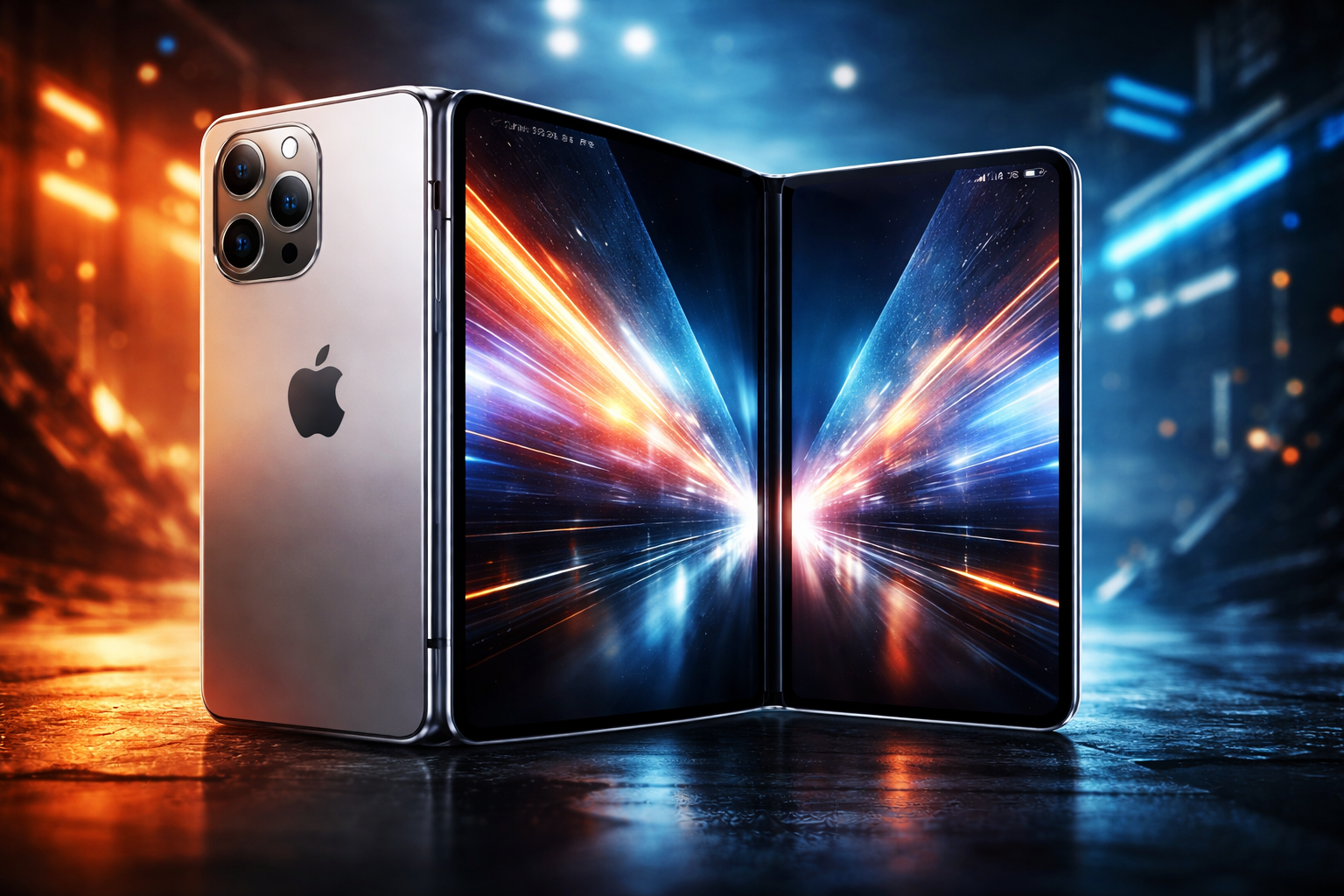
iPhone Ultra Fold Rumors 2026: 7 September Release Leaks
iPhone Ultra Fold rumors 2026 are heating up again, and the biggest question is simple: is Apple really planning a foldable iPhone for September 2026, or are we looking at a later launch (or even a slip to 2027)? Right now, nothing is official. Still, supply-chain chatter and analyst notes keep pointing to a “first foldable iPhone” era that’s getting closer.
At the same time, you don’t want to plan a $2,000+ purchase on wishful thinking. So below, I’m separating what’s widely repeated from what feels more like a leap—and I’ll explain what these leaks would mean for real life: pocket use, battery life, camera trade-offs, and India pricing.
Quick summary: the most important leaks in 30 seconds
Most reports still point to a 2026 window for Apple’s first foldable iPhone, but a September 2026 launch date remains far less certain than a fall reveal. Meanwhile, the most repeated hardware rumors include a 5.3–5.5-inch outer screen, a 7.6–7.8-inch inner screen, and Apple’s big goal: a dramatically reduced crease.
iPhone Ultra Fold launch date: September 2026 vs fall 2026
The “September 2026” angle keeps popping up because Apple sometimes uses spring events for new product categories or special releases. However, Apple’s iPhone cycle usually centers on September. So if Apple plans a foldable iPhone, many watchers still expect a fall 2026 announcement, with shipping either soon after or later due to supply limits.
That’s the practical way to read it: September 2026 could be a target, but fall 2026 looks more realistic if Apple wants maximum attention alongside iOS and iPhone releases. On the other hand, Apple could choose September to avoid competing with the main iPhone lineup and to position the foldable as a separate “Ultra” product family.
Also, foldables are hard to build at scale. If Apple can’t hit its durability goals, it will delay the device rather than ship something that hurts the brand. For broader Apple context, you can track Apple’s current lineup here: Apple iPhone lineup and official specs.
iPhone Ultra Fold rumors 2026: 7 leaks ranked by confidence
1) Display sizes: compact outside, mini-tablet inside (High)
One of the most consistent leaks is the screen sizing: an outer display around 5.3–5.5 inches and an inner display around 7.6–7.8 inches. If that’s accurate, Apple aims for a phone that feels manageable when closed and iPad mini-like when opened.
In everyday use, that matters more than it sounds. A smaller outer screen encourages one-handed texting and quick replies. Then, when you open it, you get room for reading, editing, and multitasking.
2) “Crease-free” or “crease-minimized” display push (Medium-High)
Apple’s biggest potential win isn’t just “we made a foldable.” It’s “we made a foldable that feels less like a compromise.” Several rumors claim Apple is chasing a dramatically reduced crease.
Still, “crease-free” often turns into marketing language. Even the best foldables today show some crease under certain light. So the safer expectation is this: Apple may reduce it, not erase it.
For background on foldable panel approaches and materials, it helps to understand the broader display industry too. Here’s a reference point: Samsung Display foldable display technology.
3) Titanium and a durability-first hinge (Medium)
Rumors frequently mention premium materials like titanium and an “Ultra” build approach. That makes sense because foldables live or die by the hinge. Apple won’t want squeaks, wobble, or a hinge that loosens after months.
Also, Apple tends to optimize the “feel” of hardware—how it opens, how it snaps shut, how it sits flat. If Apple enters foldables, expect a hinge tuned like a precision part, not just a flexible joint.
4) Thickness targets vs Galaxy Z Fold rivals (Medium)
Thinness rumors always show up with foldables, and for good reason. A foldable that feels like a brick won’t go mainstream. So leaks suggesting an ultra-thin design fit the category pressure.
However, thinness has a cost. If Apple pushes too thin, it risks battery size, camera bump awkwardness, and even durability. As a result, the “Ultra Fold” might prioritize sturdiness over chasing the thinnest body on a spec sheet.
5) Battery: the quiet dealbreaker (Medium)
Battery rumors matter more on a foldable than on a normal phone because you power two displays and often run more multitasking. Even if Apple uses efficient chips, the physics stay the same: bigger screens eat more power.
So if you’re hoping for “Pro Max battery life plus a foldable screen,” keep expectations realistic. Apple could still deliver strong battery life, but it may require a thicker body, smarter software limits, or both.
6) Cameras: possible trade-offs, especially telephoto (Medium-Low)
A common foldable compromise is camera hardware. Space gets tight. So rumors suggesting a dual rear camera setup (and possibly no telephoto) aren’t shocking.
What does that mean for you? If you rely on zoom for portraits, events, or travel shots, a missing telephoto lens would feel like a downgrade versus the Pro Max line. On the other hand, Apple could still deliver excellent main-camera quality and computational photography.
7) Biometrics: Touch ID comeback vs Face ID (Low-Medium)
Foldables create awkward angles for face scanning when the phone sits half-open on a table. Because of that, some rumors float Touch ID in a side button as a practical solution.
Still, Apple loves Face ID. So the likely outcome could be a hybrid approach: Face ID where possible, with Touch ID as a fallback. But right now, this remains one of the least certain rumor points.
“iPhone Fold” vs “iPhone Ultra Fold”: what the name rumor really means
The naming debate tells you how Apple might position the product. “iPhone Fold” sounds like a new category entry. “iPhone Ultra Fold” sounds like a halo device—expensive, limited, and meant to lead the brand’s design story.
If Apple uses “Ultra,” expect Apple to price it aggressively and keep it separate from the standard iPhone lineup. Also, the word “Ultra” signals that Apple might accept lower volumes at first, then scale up once manufacturing stabilizes.
Background: why Apple waited so long to make a foldable
Apple rarely ships a first-gen product just to “match the market.” Instead, Apple tends to wait until it can deliver a version that feels more finished. Foldables have faced real issues: visible creases, dust worries, long-term hinge wear, and thick bodies.
Meanwhile, the foldable category has grown, even if it remains a niche. IDC has tracked foldable shipments as a distinct segment, and it reported about 15.9 million foldable phones shipped in 2024 (with continued growth expected). For broader market context, see: IDC mobile market research.
In other words, Apple may believe the market is now big enough to justify the effort—especially in the premium tier where Apple dominates mindshare. For premium-market context, Counterpoint frequently covers this space: Counterpoint Research smartphone market analysis.
What these leaks would mean in real life (not just on paper)
One-handed use: the outer screen matters more than you think
A 5.3–5.5-inch cover display suggests Apple wants you to do “normal phone stuff” without opening the device every time. That helps with quick calls, boarding passes, and short replies.
But it also raises a tough question: will the outer screen feel cramped for typing? If Apple keeps bezels small and tunes iOS layouts, it could still feel fine. If not, it may push you to open the phone more often, which affects battery and hinge wear.
Multitasking: iPad mini vibes, but only if iOS plays along
A 7.6–7.8-inch inner display gives you room to breathe. However, the hardware only shines if iOS offers practical multitasking. Apple could borrow ideas from iPad split view and stage-style layouts, then tailor them for an iPhone-sized foldable.
Also, expect Apple to focus on “smooth” more than “busy.” Instead of dozens of window modes, Apple may offer a few great layouts that feel fast and stable.
Durability: Apple will sell confidence, not just cool factor
Foldables attract early adopters, but they also scare normal buyers. So Apple’s likely strategy is to over-engineer the hinge and materials, then support the device with strong repair programs and accessories.
Still, you should assume first-gen risk. If you can’t tolerate a higher chance of repairs, a Pro Max-style phone will remain the safer buy.
iPhone Ultra Fold specs: the most likely “Ultra” blueprint
- Outer display: about 5.3–5.5 inches (widely reported range)
- Inner display: about 7.6–7.8 inches (widely reported range)
- Design: book-style fold, premium materials, durability-first hinge (mixed confidence)
- Chip/RAM: speculation around A20/A20 Pro and up to 12GB RAM (speculative)
- Cameras: possible dual rear cameras; telephoto not guaranteed (speculative)
- Biometrics: Face ID and/or Touch ID side button (uncertain)
- Price: likely $2,000+ territory (rumor-based, not confirmed)
If you want to compare against current iPhone baselines, Apple’s official technical pages help ground expectations: Apple iPhone technical specifications.
iPhone Ultra Fold India: launch timing and price reality check
Let’s talk about the part many rumor roundups skip: India. If Apple launches a foldable iPhone globally, India will likely get it. However, two things may change your plan: timing and pricing.
First, India availability sometimes lags for niche models, especially if supply is tight. So even if Apple reveals the device in a global event, initial stock might prioritize the US and a few top-tier markets.
Second, the price. If the iPhone Ultra Fold lands around $2,000+ in the US, the India price could climb sharply after duties and taxes. As a result, the foldable could become a true luxury iPhone in India, not a mainstream flagship.
So who should actually wait in India? If you already plan to spend top-tier money and you want the newest form factor, waiting makes sense. But if you mainly want the best camera and battery for the money, a Pro Max-style phone will likely stay the smarter value.
Expert perspectives: why analysts disagree on the 2026 timeline
Most serious observers land in the same place: Apple will launch a foldable when it can meet quality targets and secure enough parts. Where they disagree is the timeline.
- The “2026 is realistic” view: The foldable market has matured, suppliers have better materials, and Apple has had years to test prototypes. Therefore, a 2026 reveal looks plausible.
- The “it slips to 2027” view: Apple won’t compromise on crease visibility, durability, or battery life. If those targets miss, Apple delays—especially for a first-gen category device.
- The “limited launch” middle ground: Apple could announce in 2026 but ship in smaller volumes, stretching availability into 2027 in some regions.
For ongoing mainstream reporting around Apple as a company, you can also follow Reuters’ tech coverage here: Reuters technology news.
What happens next: how to watch the rumors without getting fooled
If you’re tracking the iPhone Ultra Fold, focus on signals that usually get real closer to launch.
- Consistency across multiple reports: If display sizes and suppliers keep matching across sources, confidence rises.
- Manufacturing and supply hints: Foldables need tight yields. When leaks start talking about ramps and volumes, that matters.
- Accessory ecosystem chatter: Case makers and screen-protector brands often move when a launch feels near.
- Apple event patterns: If Apple teases a new “Ultra” tier across products, that could support the branding rumor.
Meanwhile, if you need a phone soon, don’t freeze your buying decision on a date that Apple hasn’t confirmed. Instead, decide what you want most: a foldable screen, or the most proven camera-and-battery combo.
FAQs
Is the iPhone Ultra Fold Really Launching in 2026?
Possibly. Multiple reports suggest Apple could launch the iPhone Ultra Fold in 2026, though ongoing engineering and durability challenges may delay it until 2027. Apple has not officially confirmed the device or its release timeline yet.
Is there a real iPhone Ultra Fold September 2026 launch date?
September 2026 is still a rumor, not a confirmed schedule. A fall 2026 reveal may fit Apple’s usual iPhone rhythm better.
Will Apple call it iPhone Fold or iPhone Ultra Fold?
No one knows yet. “iPhone Fold” is the long-running name, while “Ultra” suggests a more premium, limited, halo-style product.
What are the most likely iPhone Ultra Fold specs?
The most repeated leaks include a 5.3–5.5-inch outer display, a 7.6–7.8-inch inner display, and a big push to reduce the crease. Chip, RAM, cameras, and biometrics remain more speculative.
Will the iPhone Ultra Fold have a visible crease?
It will probably have some crease under certain lighting, like other foldables. Still, Apple may reduce it more than rivals if the rumors are right.
How much will the iPhone Ultra Fold cost?
Pricing rumors commonly point to $2,000+ territory. Treat any exact number as speculation until Apple announces it.
Will the iPhone Ultra Fold launch in India?
India will likely get it if Apple goes global, but availability could be later than the US. Also, pricing may jump due to taxes and import costs.
Should you wait for the iPhone Ultra Fold or buy a Pro model?
If you want the foldable experience and you can handle first-gen risk, waiting could make sense. But if you want the safest camera, battery, and durability choice, a Pro/Pro Max-style phone will likely stay the better bet.
Conclusion: exciting rumors, but keep your expectations grounded
The iPhone Ultra Fold could be Apple’s most meaningful iPhone shake-up in years, mainly because it changes what an iPhone can be: a pocket phone that turns into a mini tablet. Still, the biggest themes in the leaks—crease control, hinge durability, battery life, and price—also explain why Apple might delay it.
If you know someone who’s holding off on their next iPhone because of iPhone Ultra Fold rumors 2026, share this with them. Also, what would make you buy it: the bigger screen, the “Ultra” build, or a crease that’s finally hard to notice? Drop your take in the comments and bookmark this page for updates as new leaks land.