AirPods Max 2 Review: 7 Tests That Reveal the Truth
If you’re shopping in the $400 tier, you’re not looking for “pretty good.” You want a headset that feels like an upgrade every single day—on flights, at your desk, and on calls. This airpods max 2 review focuses on what matters in real life: audio, noise canceling, mic clarity, comfort, and whether Apple’s H2-driven features actually help—or just sound cool on a spec sheet.
Apple kept the same premium look and price, but the internals changed in the places that count. Still, “new” doesn’t always mean “worth it,” especially if you already own Gen 1 or you’re also considering the Sony WH-1000XM6 or Bose QuietComfort Ultra 2.
Quick summary (featured snippet)
AirPods Max 2 delivers best-in-class noise cancellation, stronger call quality, and small-but-real sound refinements. The biggest upgrade is the H2 chip, which improves ANC and enables smarter features like Conversation Awareness and Live Translation. However, comfort (clamping force) and battery life (about 22 hours) remain the main trade-offs at $399.
AirPods Max 2 review: the 7 real-world tests
Test 1: Sound quality (music you actually play)
First, let’s talk about the part everyone argues about: sound. AirPods Max 2 doesn’t flip the sound signature upside down. Instead, it tightens the edges. You get cleaner treble detail, a slightly wider soundstage, and better consistency across different head shapes and ear placement.
In practice, that means cymbals and high hats separate more clearly from vocals. Also, busy mixes feel less “stacked” in the center. If you listen to orchestral, jazz, or well-recorded pop, you’ll notice it sooner. If you mostly stream podcasts and lo-fi playlists, the jump can feel modest.
For measurement-backed impressions, independent testing digs into the consistency improvements up to around 3 kHz, which helps reduce that “my headphones sound different today” feeling between sessions. See the data-driven breakdown from Headphones.com’s AirPods Max 2 audio testing.
Test 2: Max 2 audio test (wired lossless vs. wireless)
Here’s a feature that sounds niche until you think about it: USB-C lossless audio. With a USB-C connection, AirPods Max 2 supports up to 24-bit/48kHz lossless playback. That’s rare in mainstream ANC headphones.
Now, will most people hear a night-and-day change? No. But if you already pay for lossless streaming, or you keep local files on a laptop, it gives you a legit “serious listening” mode when you want it.
Still, wireless is how most owners will use these. Over Bluetooth, the experience stays excellent, but don’t buy Max 2 only for lossless unless you know you’ll use a cable regularly. For a practical consumer take on this feature, read Business Insider’s AirPods Max 2 review.
Test 3: Noise cancellation (plane rumble, office chatter, street noise)
Apple claims the H2 system delivers up to 1.5x better active noise cancellation than the original. In the real world, you’ll notice the biggest benefit in low-frequency noise: plane engine rumble, bus vibration, and HVAC hum.
Meanwhile, voices and mid-range sound (like nearby conversations) improve too, but less dramatically. So yes, the jump is real, but it’s not a magic “silence button” in every situation.
Objective lab-style measurements back up the strong isolation performance. You can see detailed ANC and isolation results at RTINGS’ AirPods Max 2 review and measurements.
Test 4: Transparency mode (can you trust what you hear?)
Transparency matters more than people admit. You’ll use it walking a city block, grabbing coffee, or listening for an airport announcement. AirPods Max 2 still does this extremely well. Voices sound natural, and you don’t get that “robot hiss” effect that cheaper headsets often add.
Additionally, the system feels fast. When you toggle modes, it responds immediately, which sounds small—until you use it 20 times a day.
Test 5: Microphones and calls (the underrated upgrade)
If you work remotely or take calls on the go, this is where Max 2 quietly separates itself. The H2 chip improves voice isolation and keeps speech clearer when the world gets loud.
In a café, you should sound more “forward” and less buried under background noise compared to Gen 1. On a windy sidewalk, the headset does a better job reducing that harsh rushing sound that ruins calls.
It’s not just about sounding good to you. It’s about sounding reliable to everyone else. If you take calls daily, this single improvement can matter more than the subtle sound tuning changes.
Test 6: Comfort after 1 hour vs. 6 hours
Comfort remains the most common dealbreaker. AirPods Max 2 still clamps more firmly than some rivals, and that can cause fatigue after 5–6 hours for many people.
At first, the soft ear cushions feel premium. Then, the pressure can sneak up on you, especially around the temples and jawline. If you’re sensitive to clamp, you should treat “all-day comfort” as a question mark, not a guarantee.
Comfort tips that actually help:
- Take short breaks: even 2 minutes every hour helps reduce pressure buildup.
- Adjust where the cups sit: a small shift up or back can change pressure points.
- Test before committing: if you can, wear them in-store for at least 10 minutes, not 30 seconds.
Test 7: Battery and charging (travel reality check)
Battery life lands around 22 hours with ANC. That’s good enough for most trips, but it doesn’t lead the class. Sony’s WH-1000XM6 often wins on sheer endurance, especially for long-haul travel where you’d rather not think about charging.
On the other hand, 22 hours still covers a workweek for many people who don’t listen nonstop. So the real question is your routine: do you charge daily anyway, or do you push devices until they die?
What’s new in AirPods Max 2 (and what didn’t change)
Apple didn’t redesign the Max line. Instead, it focused on the system that runs everything: the H2 chip. That choice shapes almost every real upgrade.
- New: H2 chip enabling stronger ANC, smarter adaptive features, and better call handling.
- New: USB-C connection with 24-bit/48kHz lossless support when wired.
- Same vibe: premium metal build, replaceable ear cushions, and the overall design language.
- Same concern: weight and clamping force can still fatigue some users.
For Apple’s official feature list and specs, check Apple’s AirPods Max page.
Background & context: why the H2 chip matters more than specs
Many headphones chase upgrades with bigger drivers or wild EQ marketing. Apple’s approach here looks more “systems-focused.” The H2 chip improves how the headset reacts in real time—how it cancels noise, adapts audio, and processes your voice.
Because of that, Max 2 can feel more “effortless” than headphones that technically sound great but need constant app tweaking. However, that same approach can frustrate people who want deep manual control over ANC strength or tuning.
Expert perspectives: where reviewers agree (and where they don’t)
Across measurement-heavy sites and mainstream reviews, a few themes show up again and again:
- Consensus: ANC sits at or near the top of the category, especially for low-frequency noise. RTINGS’ data supports this strongly.
- Consensus: Sound improvements exist, but they’re incremental, not a “new era” leap.
- Consensus: Mic quality gets a meaningful bump, even if it’s not Apple’s headline feature.
- Debate: Comfort varies wildly person to person, and clamp sensitivity changes the whole verdict.
If you want an audiophile-leaning perspective on tuning and detail, you can compare notes with RecordingNOW’s AirPods Max 2 review.
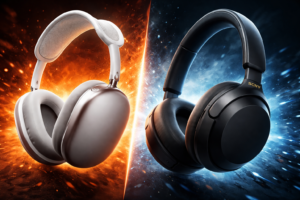
AirPods Max 2 vs. Sony WH-1000XM6 vs. Bose QC Ultra 2
These three often land in the same cart. So, instead of vague “best overall” talk, here’s the practical breakdown.
Choose AirPods Max 2 if…
- You use an iPhone, iPad, and Mac daily and want seamless switching.
- You prioritize top-tier ANC for flights and commuting.
- You take calls often and care about voice clarity.
- You like a more refined, balanced sound rather than heavy bass.
Choose Sony WH-1000XM6 if…
- You want 30+ hour battery life for long travel.
- You use Android (or mix platforms) and want fewer ecosystem limits.
- You prefer stronger bass punch out of the box.
Choose Bose QuietComfort Ultra 2 if…
- You wear headphones all day and need lower clamping fatigue.
- You want excellent ANC but rank comfort as your #1 feature.
- You like a warmer, more relaxed sound.
Should you upgrade? A simple decision framework (Gen 1 → Gen 2)
If you already own the original AirPods Max, this is the part you actually need. The Max 2 upgrade makes the most sense when it fixes a problem you feel every week.
- Upgrade now if you fly often, commute in loud transit, or rely on ANC daily. The low-frequency improvement adds up fast.
- Upgrade now if you take calls in noisy places. The mic improvement can feel bigger than the sound change.
- Wait if you mostly listen at home in quiet rooms and your Gen 1 still feels comfortable.
- Skip if clamp fatigue already bothers you on Gen 1. The overall fit character hasn’t changed enough to guarantee relief.
In other words: Max 2 is a “use-case upgrade,” not an “everybody upgrade.”
What happens next: who this 2026 headphones review should guide
In the premium market, the best headphone isn’t the one with the best marketing line. It’s the one that fits your day. AirPods Max 2 pushes harder into “premium daily driver” territory for Apple users, especially with ANC and call performance.
However, the competition keeps getting sharper. Sony keeps winning battery battles, and Bose keeps winning comfort arguments. So, before you buy, decide what you refuse to compromise on: silence, comfort, battery, or ecosystem convenience.
FAQs
Is the AirPods Max 2 worth $399?
It’s worth it if you’ll use the ANC and Apple integration daily. If you just want great sound and long battery, Sony or Bose may offer better value for your habits.
How much better is AirPods Max 2 sound vs. Gen 1?
The sound upgrade is subtle. You get better treble detail, a slightly wider stage, and more consistent mids across fit changes, but it won’t feel like a different headset.
Is Apple’s “1.5x better ANC” real?
It’s most noticeable in low-frequency noise like plane rumble. In mid-range noise like speech, the improvement feels smaller, but you can measure it in lab testing.
How is the microphone on AirPods Max 2 for Zoom and calls?
It’s one of the most meaningful upgrades. Voice isolation improves, and call clarity holds up better in busy environments compared to Gen 1.
Does AirPods Max 2 work well with Android?
You can connect via Bluetooth, but you lose much of what makes them special: seamless switching, deep feature integration, and some of Apple’s smart behaviors.
What is “max 2 audio test” supposed to show?
It usually refers to comparing wired lossless (USB-C) vs. wireless playback, plus checking whether the tuning changes feel real in A/B listening—especially in treble detail and soundstage.
Is AirPods Max 2 comfortable for all-day wear?
It depends on your sensitivity to clamping force. Many people feel pressure after 5–6 hours, while others adjust over time. If all-day comfort is critical, test before buying.
Does lossless audio over USB-C matter?
It matters most if you already use lossless sources and don’t mind a cable sometimes. For casual streaming, it’s a nice bonus, not the main reason to buy.
Conclusion: sound revolution or smart refinement?
AirPods Max 2 isn’t a “sound revolution” in the dramatic sense. Instead, it’s a smart refinement that targets what premium buyers feel daily: better ANC, clearer calls, and more polished audio. If you live in the Apple ecosystem and you value silence and convenience, it’s one of the strongest picks in any 2026 headphones review lineup.
If you’re deciding right now, share this with someone who’s also shopping the $400 tier. Also, what matters more to you—comfort, ANC, or battery life? Drop a comment and tell us how you’re choosing.