AirPods Max 2 vs Sony XM6: 7 Key Picks Before You Buy
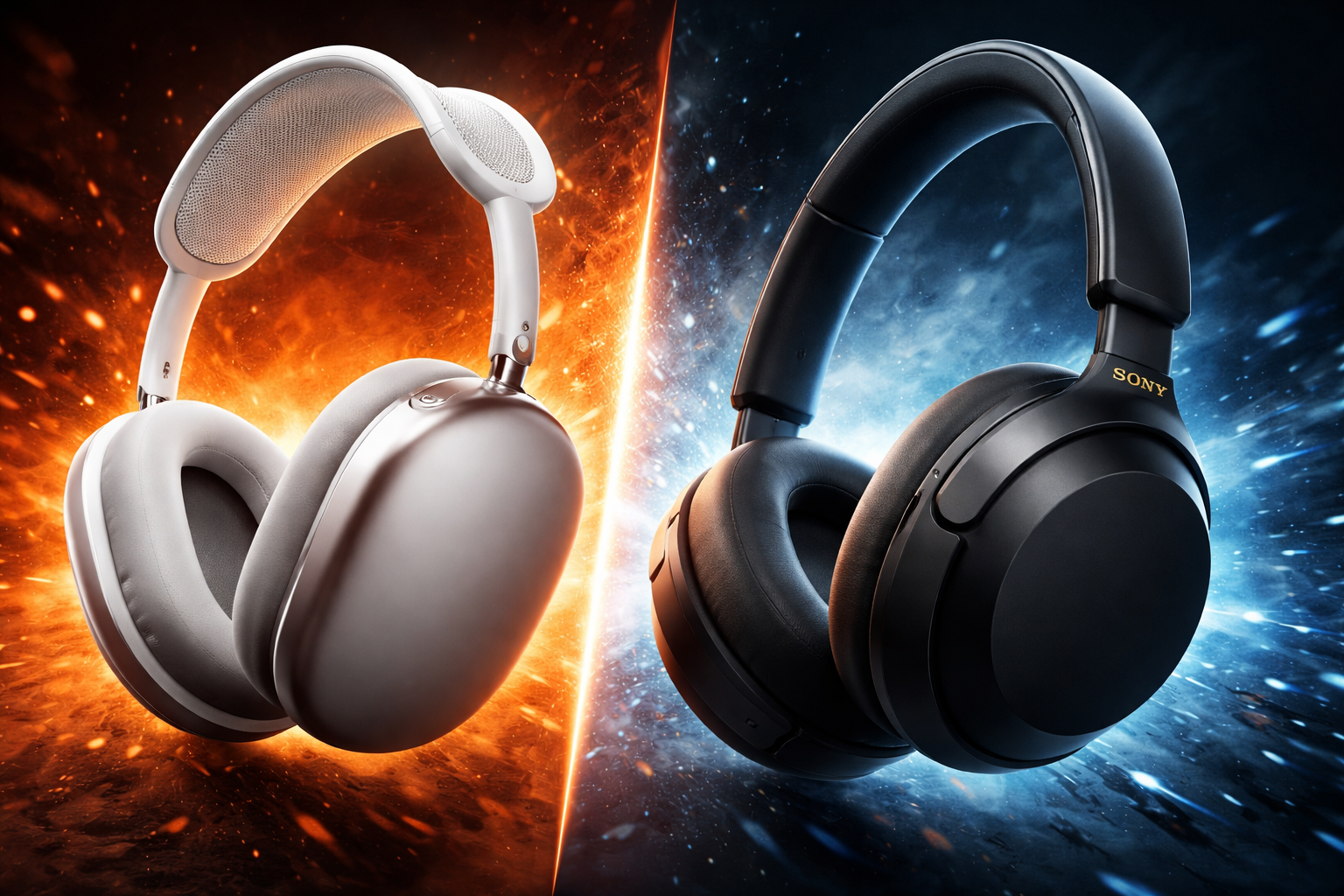
If you’re stuck on airpods max 2 vs sony xm6, you’re in the right place. These are two of the most wanted premium ANC headphones, and the choice isn’t “Apple good, Sony good.” It’s about how you actually listen—on a plane, in a loud café, during back-to-back calls, or at a desk for eight hours.
So which one makes more sense for your money in 2026? Below, I’m breaking down the real differences that decide regret (or relief) after checkout: noise cancelling, comfort, call quality, battery, device compatibility, and the little daily perks that don’t show up in spec sheets.
Quick summary (2–3 sentences)
AirPods Max 2 win if you live in Apple’s ecosystem and care most about top-tier call quality, best-in-class transparency, and Spatial Audio for movies and Apple Music. Sony WH-1000XM6 win for most people who want lighter comfort, longer battery life, more tuning options, and stronger cross-platform flexibility—usually for about $100 less.
AirPods Max 2 vs Sony XM6: the 7 biggest differences
1) Comfort and weight: XM6 wins for all-day wear
First, let’s talk about the thing you feel every second: weight. Sony WH-1000XM6 sit around 254g, while AirPods Max 2 come in at about 386g. That gap doesn’t sound huge on paper, but it shows up fast during long sessions.
In practice, XM6 feel like “put them on and forget them.” Meanwhile, Max 2 feel premium and stable, but they can start to clamp if you have a larger head or wear glasses for hours. If your use case looks like “workday + commute + errands,” Sony’s lighter build usually wins.
- Choose AirPods Max 2 if you mainly listen in 1–3 hour blocks and want a more “locked-in” fit.
- Choose Sony XM6 if you wear headphones 4–10 hours a day or you travel often.
2) Battery life: Sony’s lead is hard to ignore
Next, battery. Sony rates the XM6 at about 30 hours with ANC on, while AirPods Max 2 rate around 20 hours. Real-world use tends to land close to that: XM6 often hit the mid-to-high 20s at normal volume, while Max 2 often land in the high teens to 20.
Also, Sony’s fast charge is a real “saved my trip” feature. Reports commonly cite about 3 minutes for around 3 hours on XM6, while Max 2 fast charge is helpful but less dramatic (about 5 minutes for around 1.5 hours).
- If you hate charging, XM6 are the safer buy.
- If you mostly listen near a charger, Max 2’s shorter battery may not matter.
3) ANC performance: extremely close, with different strengths
Both models sit in the top tier of best ANC headphones, and the gap is smaller than fan arguments make it sound. Lab-style testing and blind impressions typically put them within a couple points of each other. SoundGuys has reported Max 2 slightly ahead in overall perceived reduction (around 89% vs 87%), while RTINGS testing often shows Sony handling low-frequency rumble extremely well in the categories that matter for flights and engines.
Here’s the plain-English version:
- Sony XM6 often feel better at smoothing out deep, low rumbles (plane cabin, bus engine, HVAC).
- AirPods Max 2 feel excellent across the spectrum and pair that with standout transparency for quick “hear the world” moments.
If you want to compare detailed measurements and scoring, check RTINGS’ AirPods Max 2 vs Sony XM6 comparison tool and SoundGuys’ best noise-cancelling headphones rankings.
4) Transparency mode: Max 2 feel more “natural”
ANC is only half the story. The other half is how good the headphones feel when you need awareness—ordering coffee, hearing an announcement, or talking to someone at your desk.
AirPods Max 2 tend to deliver a more natural, less “processed” transparency. Voices come through clearly, and you don’t get as much of that artificial hiss or sharpness that some transparency modes add. Sony’s transparency (ambient sound) works well too, but Max 2 still feel like the benchmark for “I forgot I turned it on.”
5) Call quality in noise: AirPods Max 2 pull ahead
If you take calls in real life—not a quiet home office—this section matters more than most buyers expect. In windy streets and busy cafés, AirPods Max 2 usually keep your voice cleaner and more “present,” with less weird warbling or background pumping.
Meanwhile, Sony XM6 still do fine, especially indoors. However, their processing can make voices sound slightly “handled” in tougher conditions. If your day includes meetings on the go, Max 2 can be worth paying extra for on this factor alone.
- Pick Max 2 if calls are a daily priority in noisy places.
- Pick XM6 if you mostly call from quiet rooms and care more about comfort and battery.
6) Sound and tuning: Max 2 feel “cleaner,” XM6 feel “more flexible”
Both sound premium. Neither is a bad pick. But they approach sound differently.
AirPods Max 2, helped by Apple’s newer chip and tuning, tend to deliver tight sub-bass, strong instrument separation, and clean mids that make vocals and podcasts easy to follow. They also shine for movies, especially with Spatial Audio and head tracking on iPhone, iPad, and Apple TV.
Sony XM6, on the other hand, give you more ways to make the sound yours. You get a robust EQ (often described as a 10-band feel, depending on region/app version), and on supported devices you can use higher-quality Bluetooth options like LDAC. If you listen to bass-heavy playlists or you like tweaking, Sony’s approach usually feels more satisfying long-term.
For official feature lists, see Apple’s AirPods Max specs page and Sony’s WH-1000XM6 product page.
7) Ecosystem and connectivity: this decides most purchases
This is where the “max 2 sony comparison” becomes less about audio and more about your devices.
- AirPods Max 2 feel effortless inside Apple’s world. Auto-switching, Find My behaviors, and Spatial Audio features integrate in a way that’s hard to replicate elsewhere.
- Sony XM6 feel more universal. Multipoint Bluetooth makes life easier if you bounce between a laptop and phone. Plus, Sony keep the wired fallback (3.5mm) that travelers and office users still love.
If you use Android + Windows, Sony’s flexibility usually wins. If you use iPhone + Mac + Apple TV, Max 2’s “it just works” factor stays a real advantage.
Price and value: what you get for the extra money
Prices move, but as of May 2026, AirPods Max 2 commonly list around $549 in the US, while Sony WH-1000XM6 often sit around $449–$459. That’s not a tiny gap.
So ask yourself a blunt question: what are you buying with that extra $90–$100?
- With AirPods Max 2, you pay for Apple ecosystem convenience, standout transparency, and stronger call performance in tough environments.
- With Sony XM6, you pay for longer battery, lighter comfort, multipoint, wired options, and deeper sound customization.
Also, think in “hours of ANC per charge.” Even before battery aging, XM6 can give you roughly 50% more playtime per charge cycle. Over a year of daily use, that difference becomes a quality-of-life feature, not a spec.
Real-world scenarios: which one fits your day?
If you fly often (or commute on loud trains)
Go Sony XM6 if you want the easy win: lighter weight plus longer battery plus excellent low-rumble ANC. AirPods Max 2 still cancel noise very well, but the weight can become the bigger problem on a 6-hour flight.
If you work from cafés, co-working spaces, or open offices
Here it gets interesting. Sony XM6 keep you comfortable all day, and their ANC holds up well against the constant hum. However, if you do lots of calls with people talking behind you, AirPods Max 2 often sound clearer to the person on the other end.
If you mostly listen at home (music + movies)
If you watch a lot of content on Apple TV or an iPad, AirPods Max 2 can feel more “special” because Spatial Audio and head tracking add a cinema-like effect. Meanwhile, if you’re on a mix of devices—or you want to EQ for different genres—Sony XM6 tend to be the better long-term companion.
If you’re not in Apple’s ecosystem
This is the simplest buyer filter: if you use Android, Windows, or a mix of devices, AirPods Max 2 lose a chunk of their value. You still get premium sound and strong mics, but you miss the smooth switching and some of the “Apple magic.” In that case, XM6 usually make more sense for less money.
Background and context: why this matchup is so intense in 2026
Premium ANC headphones have turned into a real “category war,” not just a nice-to-have accessory. People now buy them for work calls, travel, and focus—not only music. That’s why battery, comfort, and microphone performance suddenly matter as much as sound.
Market research also backs this shift. Counterpoint Research has highlighted how major brands keep pushing ANC as the core feature in the high end, while surveys like Statista’s show many buyers rank long battery life as a top priority. In other words, the XM6 vs Max 2 fight reflects what people actually demand now: practical performance all day, not just nice audio at night.
If you want the broader industry context, see Counterpoint Research’s headphones market coverage.
Expert perspectives (and why reviewers disagree)
One reason you’ll see mixed “winner” picks online is that these headphones win in different ways—and reviewers don’t weight the same criteria.
- Measurement-focused reviewers may lean Sony if battery, comfort, and low-frequency ANC score higher in repeatable tests.
- Everyday usability reviewers may lean Apple if they value transparency realism, call clarity in chaos, and ecosystem convenience.
- Sound tweakers often pick Sony because EQ, codec support, and wired options give them more control.
That’s why your “best” choice depends on your routine. The good news? You can pick based on lifestyle instead of chasing a one-size-fits-all crown.
What happens next (and what to watch before buying)
Before you hit buy, keep an eye on three things.
- Deals and bundles: Sony models often see faster discount cycles. If XM6 drop $30–$50, the value gap widens quickly.
- Return windows: Comfort is personal. A generous return policy matters more than one extra feature on a spec list.
- Your next phone or laptop: If you plan to switch ecosystems soon, buy the headphones that match where you’re going—not only what you own today.
Also, remember the shared limitations: neither pair gives you true wireless lossless in the simplest way. If hi-res matters, you’ll likely use USB-C wired for best results, and Sony still keep the analog 3.5mm fallback for situations where Bluetooth isn’t ideal.
FAQs
Which has better noise cancellation, AirPods Max 2 or Sony XM6?
They’re very close. Sony XM6 often handle low-frequency rumble slightly better (great for planes), while AirPods Max 2 match them overall and tend to lead in transparency mode. If travel is your main use, XM6 are a safe bet. If you want the best awareness mode plus strong ANC, Max 2 are excellent.
Are AirPods Max 2 comfortable for long wear?
They can be, but the weight (about 386g) makes long sessions harder, especially if you wear glasses or have a larger head. Many people love them for 2–3 hour blocks, but Sony XM6 usually win for all-day comfort.
Does Sony WH-1000XM6 work well with iPhone?
Yes. You’ll get stable Bluetooth and strong ANC, and the app EQ still helps a lot. However, you won’t get Apple-style auto-switching, and some advanced codec perks matter more on Android.
How big is the real battery difference?
In normal listening, XM6 often land around 25–28 hours with ANC on, while AirPods Max 2 often land around 18–20. Sony also tend to feel less stressful because their quick charge gives you hours fast.
Is the $100 price difference worth it for AirPods Max 2?
Usually only if you’re deep in Apple and you’ll use Spatial Audio, seamless switching, and you care a lot about call clarity in noisy places. Otherwise, Sony XM6 deliver more day-to-day convenience per dollar.
Which sounds better out of the box?
AirPods Max 2 often sound cleaner in the mids and more “separated,” which helps vocals, podcasts, and detailed tracks. Sony XM6 sound great too, and many people prefer them after EQ because you can shape the sound to your taste.
Which is better for calls and Zoom meetings?
AirPods Max 2 typically perform better when the environment gets messy (wind, traffic, cafés). Sony XM6 are solid in quieter rooms, but they can process voices more aggressively in noise.
Do either of these have an IP rating for workouts?
No official IP rating on either. They can handle light sweat, but I wouldn’t treat them like gym beaters. If workouts matter most, consider a sport-focused model instead of a premium over-ear.
Conclusion: the simplest way to choose
If you want the cleanest decision rule, use this: buy based on your devices and your daily hours. AirPods Max 2 feel tailor-made for Apple users who care about calls, transparency, and movie immersion. Sony XM6 feel like the smarter everyday pick for most other people because they’re lighter, last longer, and play nicer with everything.
If this helped, share this with someone who’s stuck choosing. Also, what matters most to you—ANC strength, comfort, or call quality? Drop a comment and tell me your use case, and I’ll point you to the better fit.