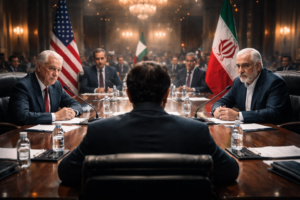
Vance Diplomacy Global Impact: 7 Key Stakes (Latest)
Vance diplomacy global impact just moved from a Washington talking point to a live test with real-world consequences. Vice President JD Vance has landed in Islamabad for high-stakes talks aimed at turning a fragile pause into a permanent ceasefire after weeks of fighting involving the U.S., Israel, and Iran. And while the headlines focus on who’s in the room, the bigger story is what happens to energy prices, shipping routes, alliances, and nuclear risk if this “bold play” works—or collapses.
Quick summary: what’s happening and why it matters
VP JD Vance is leading negotiations in Islamabad to lock in a lasting ceasefire after a six-week conflict that stretched to 41 days and killed more than 5,600 people, according to regional reporting. Markets and governments worldwide are watching because the talks touch the Strait of Hormuz, Iran’s nuclear program, and the credibility of U.S. pressure-based diplomacy.
What is Vance’s “bold diplomacy play”?
Vance’s play is simple in concept and hard in practice: use leverage-backed talks to end an active conflict without sliding into an open-ended war. In Islamabad, his team is reportedly pushing for a permanent ceasefire framework that addresses both near-term security and longer-term flashpoints—especially nuclear issues and maritime tensions.
Crucially, Vance isn’t pitching “peace talks” as a feel-good reset. Instead, he frames diplomacy as disciplined power: you talk, but you also set deadlines, demand verification, and keep consequences on the table.
For the latest on the Islamabad track and the stakes around a permanent ceasefire, see this report on Iran peace talks in Islamabad.
Who’s involved: the players shaping the outcome
JD Vance: the lead negotiator with a political clock
Vance comes into these talks with a clear brand: skepticism of foreign wars, support for American leverage, and insistence on defined goals. That worldview now faces a hard reality test. If the ceasefire holds, he looks like the architect of a pragmatic win. If it fails, critics will argue he misread Tehran, overpromised, or underplanned.
Trump: backing the talks while keeping threats alive
President Trump’s posture matters because it sets the tone for credibility. On one hand, he backs negotiations. On the other, he signals that harsher action could follow if diplomacy stalls. That mix can strengthen U.S. leverage, but it can also narrow the room for compromise if any side fears humiliation.
Envoys and intermediaries: Witkoff, Kushner, and Pakistan’s hosting role
Vance’s trip includes special envoy Steve Witkoff and Jared Kushner, according to reporting tied to the Islamabad effort. Meanwhile, Pakistan’s role as host gives it rare visibility—and risk—because any collapse could rebound on the mediator as well as the combatants.
When and where: why Islamabad matters right now
Timing drives everything here. A temporary ceasefire can stop shooting today, but it won’t stop the next crisis if the underlying triggers stay intact. Islamabad offers a venue that can support indirect channels, face-saving language, and third-party facilitation. Just as important, it’s happening while global markets still feel the shock of the conflict.
In other words, this isn’t a “post-war conference.” It’s crisis management with the next escalation still possible.
Why the world cares: the 7 biggest global stakes
1) Energy prices and inflation pressure
Even if you live far from the Middle East, you feel the ripple through fuel costs and inflation. War risk near key shipping lanes tends to raise insurance rates, tighten supply expectations, and jolt crude prices. As a result, transport costs rise, and families see it in everyday prices.
Reporting on the broader turmoil highlights how the conflict shook global energy markets. If talks fail, the fear premium can return fast.
2) Strait of Hormuz risk and global shipping stability
The Strait of Hormuz sits at the center of the world’s energy logistics. So even small incidents—seizures, drone attacks, near-misses—can turn into global disruptions. A durable ceasefire reduces the odds of tit-for-tat moves at sea. However, a weak deal can do the opposite by creating a false sense of calm.
For background on why the strait remains such a strategic chokepoint, see Strait of Hormuz reference details.
3) Nuclear escalation risk (and the verification problem)
Any ceasefire that ignores the nuclear issue may only freeze the battlefield while the deeper crisis grows. Yet nuclear diplomacy brings its own trap: verification. “Trust” doesn’t work here. Inspectors, monitoring, and enforceable limits matter more than promises.
International monitoring frameworks often depend on institutions like the International Atomic Energy Agency (IAEA), but politics can limit access and compliance. So the deal’s fine print—who checks what, when, and with what consequences—may matter more than the photo-op handshake.
4) U.S. credibility: deterrence versus overreach
Vance’s approach aims to prove the U.S. can end a conflict with leverage and defined goals. If it works, Washington can argue that force stays limited and diplomacy does the heavy lifting. If it fails, adversaries may conclude the U.S. can’t translate pressure into durable outcomes.
At the same time, allies also watch. They want reliability, but they also fear being dragged into an expanding conflict. So credibility cuts both ways: strength matters, but restraint matters too.
5) Regional balance: Israel-Iran dynamics and “next crisis” prevention
Even a successful ceasefire won’t magically unwind decades of distrust. So the key question becomes: does the agreement create a mechanism to defuse the next spark? For example, does it set rules for maritime incidents, drone activity, or proxy violence? Does it define lines that both sides agree not to cross?
If negotiators leave those issues vague, both camps may claim victory at home while quietly preparing for round two.
6) Alliance politics: burden-sharing and diplomatic style
Vance’s critics and supporters often focus on “America First” instincts. Yet this moment tests whether that approach can still deliver stable alliances. Partners want a seat at the table, not a surprise announcement after decisions are locked in.
One analysis argues Trump-era strategy leans on burden-sharing and clear objectives; that context helps explain why Vance would frame these talks as a hard-nosed, interest-based negotiation. See this discussion of the strategic logic behind Trump’s foreign policy.
7) Information warfare and public pressure (yes, even memes)
Oddly, the meme factor matters. Viral content can shape public expectations, ridicule opponents, and harden domestic politics. When diplomacy turns into a punchline, leaders may feel pressured to “look tough” instead of staying flexible.
Coverage of the viral moment—including AI-generated satire—shows how fast serious diplomacy can go pop-culture. A sample of the trend appears in memes about Vance’s Pakistan visit.
Background and context: how the conflict reached this point
The conflict built over longstanding tension around Iran’s nuclear program and regional security concerns. Then events escalated into direct fighting involving the U.S., Israel, and Iran. Although a temporary ceasefire reduced immediate violence, it did not settle the underlying disputes.
Now the urgency comes from two clocks ticking at once. First, the human cost is already enormous after weeks of war. Second, the economic cost keeps spreading through energy and shipping markets. So Islamabad becomes the venue where negotiators try to turn “pause” into “plan.”
Expert perspectives and competing viewpoints
The case for Vance’s approach: leverage-backed realism
Supporters argue Vance is doing what many voters say they want: avoid endless war, but don’t surrender U.S. interests. In this view, diplomacy only works when the other side believes the U.S. will act if talks fail. So pressure isn’t the enemy of peace—it’s the engine that makes peace possible.
The skeptical view: diplomacy under threat can backfire
Critics warn that mixing negotiations with public threats can trap everyone. If leaders fear they’ll look weak, they may refuse reasonable compromises. Meanwhile, militants and spoilers can stage attacks to sabotage talks, betting that any violence will collapse trust.
The regional view: stability requires more than a ceasefire
Many regional observers focus on enforcement. Who guarantees compliance? What happens after the first violation? A deal without a clear response plan can invite testing, because each side may probe the boundary to see what they can get away with.
What happens next: scenarios to watch
- Scenario A: A durable ceasefire with verification. Markets calm, shipping stabilizes, and nuclear talks move into a monitored framework. Risk doesn’t vanish, but it drops.
- Scenario B: A ceasefire in name only. Shooting slows, but maritime incidents and proxy attacks continue. Markets stay jumpy, and leaders trade blame.
- Scenario C: Talks collapse and pressure spikes. Energy costs surge again, and the conflict risks widening through miscalculation—especially around sea lanes and missile exchanges.
In the coming days, watch for three signals: (1) whether negotiators announce enforcement mechanisms, (2) whether they set timelines for nuclear-related steps, and (3) whether the strait stays quiet. Those details often reveal whether diplomacy has a backbone or just a headline.
FAQs
What is Vance’s bold diplomacy play?
He’s leading talks in Islamabad to convert a temporary ceasefire into a lasting agreement tied to broader security issues, including nuclear and maritime tensions.
Why does Vance go to Islamabad?
Pakistan is hosting mediated negotiations, offering a setting for backchannel communication and third-party facilitation.
Who joins Vance on the trip?
Reporting says special envoy Steve Witkoff and Jared Kushner are part of the delegation.
What are the bold play worldwide effects if talks fail?
More energy and shipping shocks, higher prices, and greater risk of regional escalation—especially near key sea lanes.
What intl consequences could follow a weak ceasefire?
A weak deal can invite violations, increase proxy conflict, and keep markets nervous, even if front-line fighting slows.
How does Vance view foreign interventions?
He tends to argue for limited aims, defined endpoints, and diplomacy supported by leverage rather than open-ended military commitments.
How many people have died in the conflict?
Regional reporting cites more than 5,600 deaths after roughly 41 days of war.
Do memes really affect diplomacy?
They can. Viral narratives shape public mood and political incentives, which can harden negotiating positions and reduce leaders’ room to compromise.
Conclusion: the global impact is real—and imminent
Vance diplomacy global impact isn’t about one trip or one photo. It’s about whether a high-pressure, leverage-driven approach can end a dangerous conflict without triggering the next one. If the talks succeed, the world likely gets calmer energy markets and a lower risk of maritime shocks. If they fail, you may feel it fast—at the pump, in prices, and in rising geopolitical tension.
Share this with someone who needs to know, especially if they track energy prices or global security. Also, what’s your take—does leverage-backed diplomacy prevent war, or invite it? Drop a comment below and bookmark this page for updates as the Islamabad talks develop.